About Me

My photo
Bristol , United Kingdom
Poet and poetry facilitator. Neurodishevelled. My sixth poetry collection, Love the Albatross, is available from Indigo Dreams or directly from me.

Friday, 19 August 2022

The Dog Days of Elsewhere

These are the dog days up the Field of the Hollowing Oak and in the Small Dark Wood of the Mind and on the Path by the Embankment and out on the Farmland that is soon to be the New Bristol Suburb of Brabazon, partly because it's that hallucinatory time of year when everything's dry and crackly under foot and stilled in the heat, but also because it's almost two years now since our dog Ted died, and we think of him even more than usual and miss him so much. 

Not that there isn't another, smaller and rather more biddable collie keeping us company, of course. But Ted comes with us too, and sometimes I even hear myself say 'Let's take the dogs for a walk', which I kind of like. 


And of course it's been hot this summer, and a lot drier than usual. The deserted farmland is tinder dry, although a few flowers are regenerating after the mowing it received early last month. 

Meanwhile in the field of the hollowing oak, big cracks have appeared in the path that goes around the perimeter ...


... though the most marked indication of drought is on the the golf course, by the small pond. It's possible, with a little art, to take photos that make it look as it quite normal, as we make occasional illicit trips past it at twilight when all the golfers have left for home ... 


... but actually, it's level is low enough to reveal all sorts of horrors under the surface, to go alongside detritus left by the (also illicit) evening fishermen.


The larger, shallower pond is no more than damp at present, but that's nothing unusual. It's full of loosestrife, common mint, ragwort, fleabane, thistle, and reedmace. 


It's also the season for feather shedding, though for some reason this summer, I've found only corvid feathers. (Not that I'm complaining because they're beautiful.) I did decide at one point not to pick any more up, as I've enough to reconstruct several murders, but I can't seem to help myself. Here's some of the latest batch. 


My favourite is the last one. I think it's the tail feather of a magpie, and it's very notched and battered, having been on so many adventures. 

As usual, the untended parts of Elsewhere are more diverse than the tended areas, although even up the field and on the path by the embankment there are fewer flowers and insects now. Nevertheless, there's still something new and interesting to see every time we go there. 


Gradually over the month all this has set or started to set seed ... thistles, vetch, bindweed, agrimony, yarrow, hemp agrimony, melilot, greater burnet saxifrage, fleabane and common mint, tansy, betony, and great or hairy willowherb, with outliers and the woody nightshade still going strong.


The thistledown is still omnipresent, but it's startlingly thick every year. It lines the narrow badger path near the bottom of the field and makes it even harder to see the tunnels and scrapes undermining it. 


Still ebullient are my favourite wild carrots, which line long sections of the footpath. 


They look like they've been designed by someone with a spirograph and fade from perfect parasols to snowflakes to mad hats.


Referencing their other name of Queen Anne's Lace, I've never seen one with such a pronounced blood spot as this before.


As for insects, there are rather more bees than butterflies around now, and definitely no more red soldier beetles.


There's a mix here of buff-tailed bumbles, Common Carders, a honey bee, gatekeepers, a speckled wood, and a skipper on a very busy yarrow also accommodating a house fly and something I can't identify that's in the process of landing.


At the bottom of the field, the Small Dark Wood of the Mind is still quite dark, and appears to have some sort of a portal thing going on. The Grove of the Silver Chair and Ruby Crown remain largely unchanged. 


an owl pellet: its rather pointed ends suggest it might be from a tawny owl


Meanwhile, down on the path by the railway embankment, the profusion of vegetation that made us forget this will soon be a building site has started to die back, so that you can now just see the nasty plastic fence that was put up in March, while the now ghostly rosebay willowherb stands by the fence and choruses a warning.


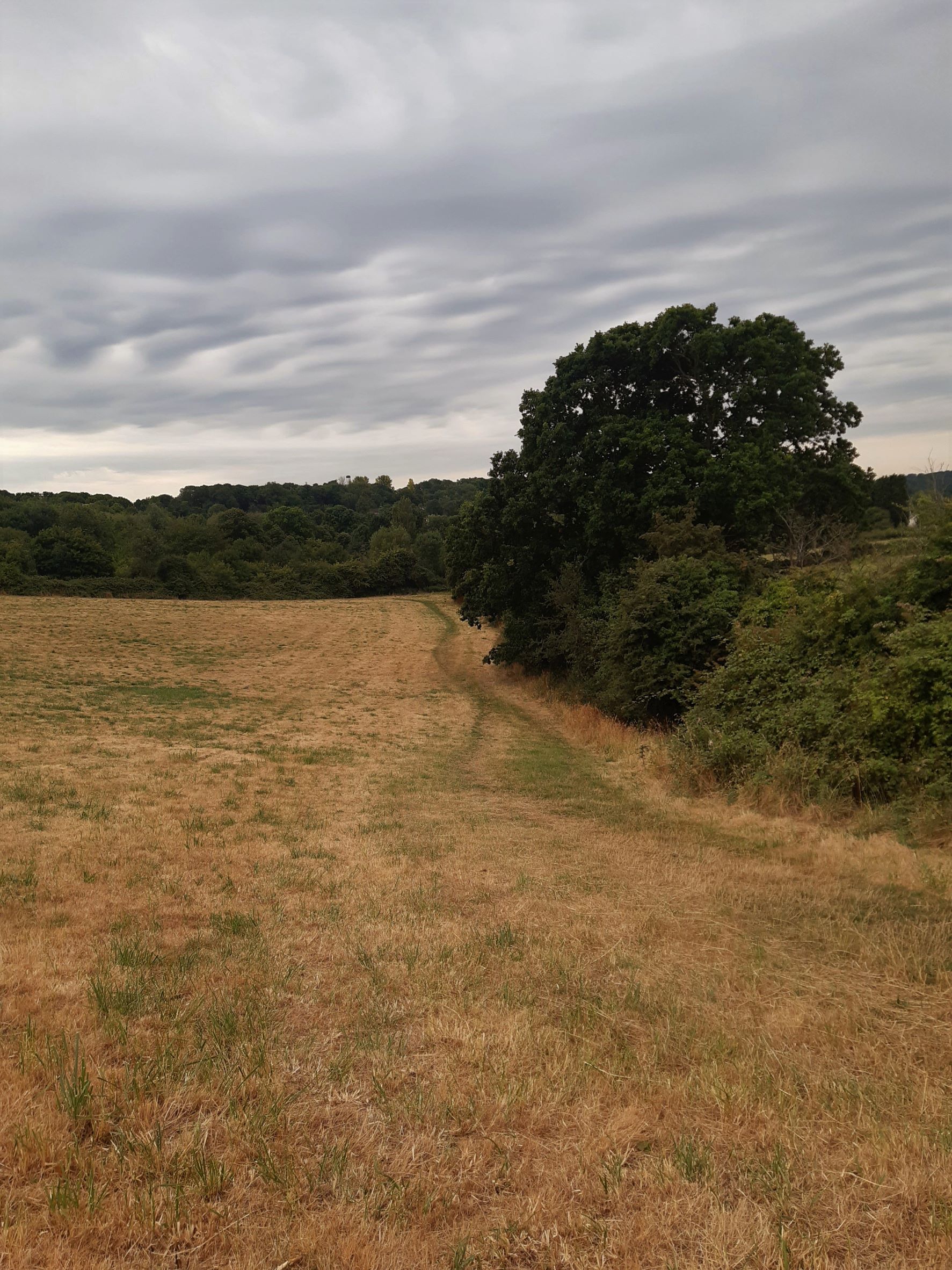
Out on the farmland there have been strange patterns in the sky ... 


... and the areas that did escape the scythe earlier now remind me of my Auntie Betty's carpet in the 1970s. 


It's definitely beginning to look autumnal out there ... 


... with a not-too-distant harvest of blackberries and sloes (guarded by stingers), apples, damsons and elderberries.

The rookery is largely silent now, though we did see rabbits on the soon-to-be pitch and putt again, and out on the fields, we had a couple of encounters with a family of three roe deer. I'd seen one earlier this summer in the hedgerow where the damsons and apples are, but one night when we were down there, we saw them emerge and bound across the field, pursued in a thankfully half-hearted fashion by a curious rather than murderous Cwtch. (Ted probably would have been murderous, though he'd never have caught them either.)


Just a week later a chopsy Jack Russell drove them out of the same hedge before being put firmly back on the lead. Cwtch just contented herself with a little growl (once everyone was out of earshot).  


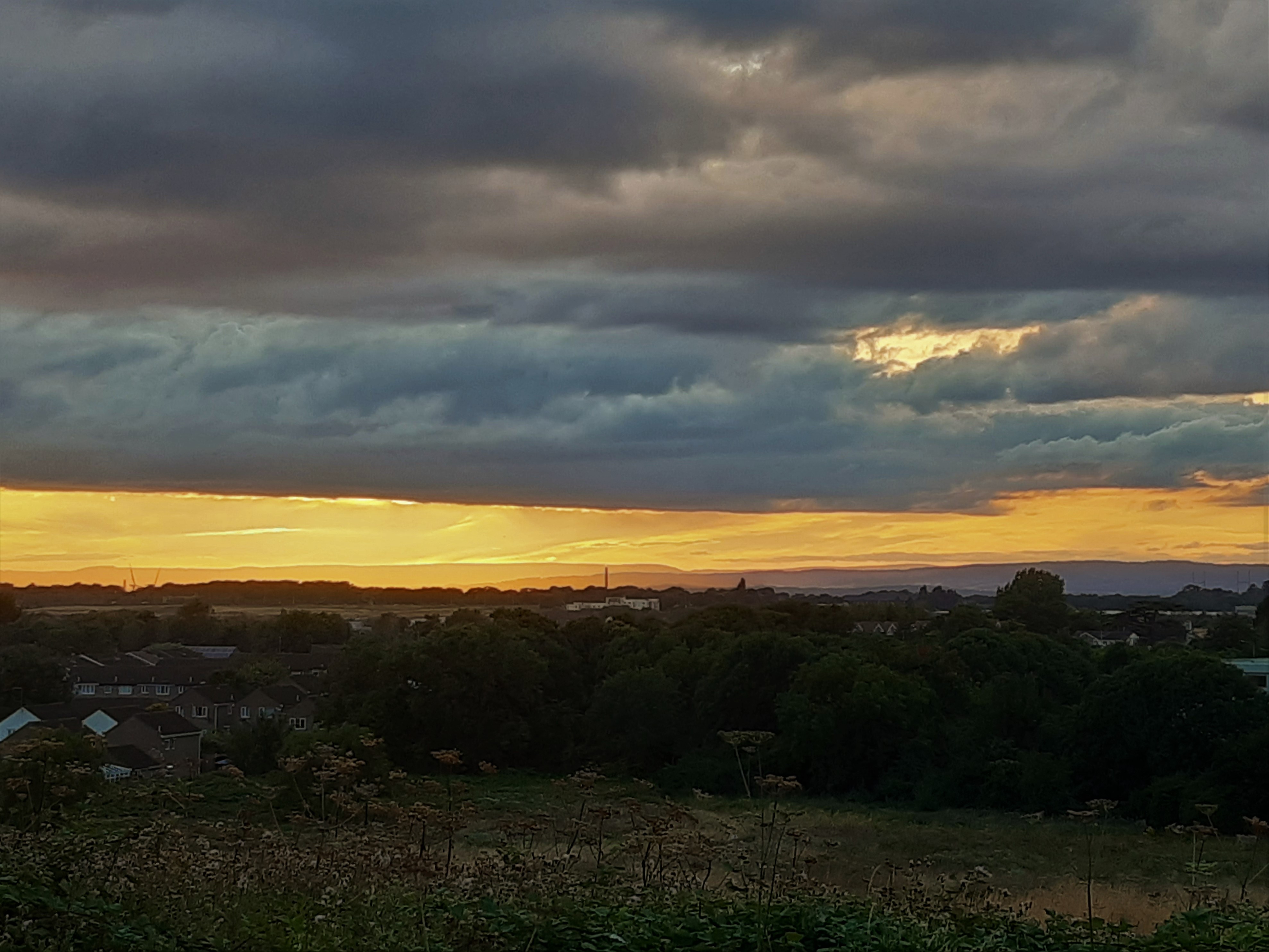
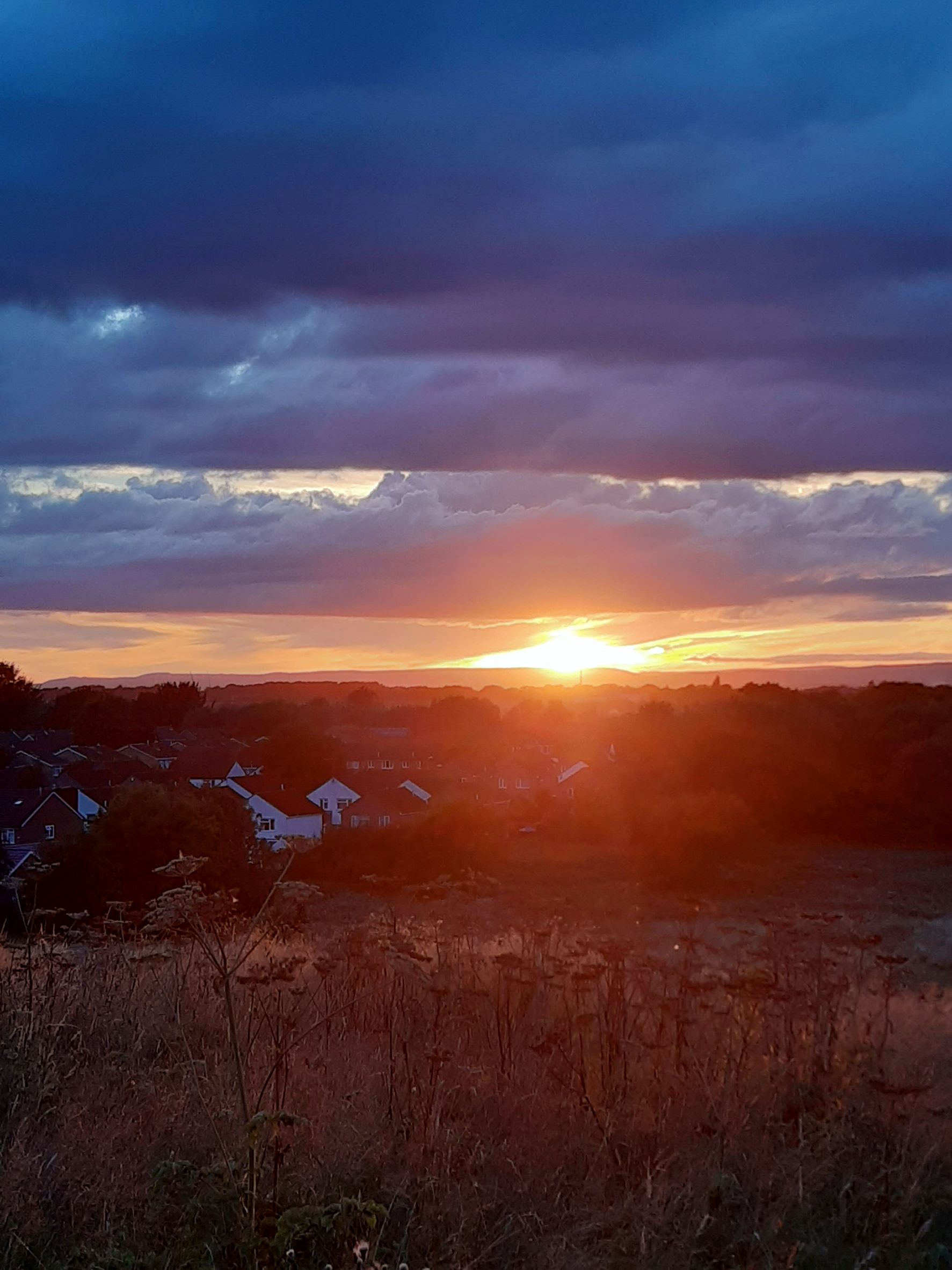
Finally,  sunsets - occasionally out on the farmland ... 


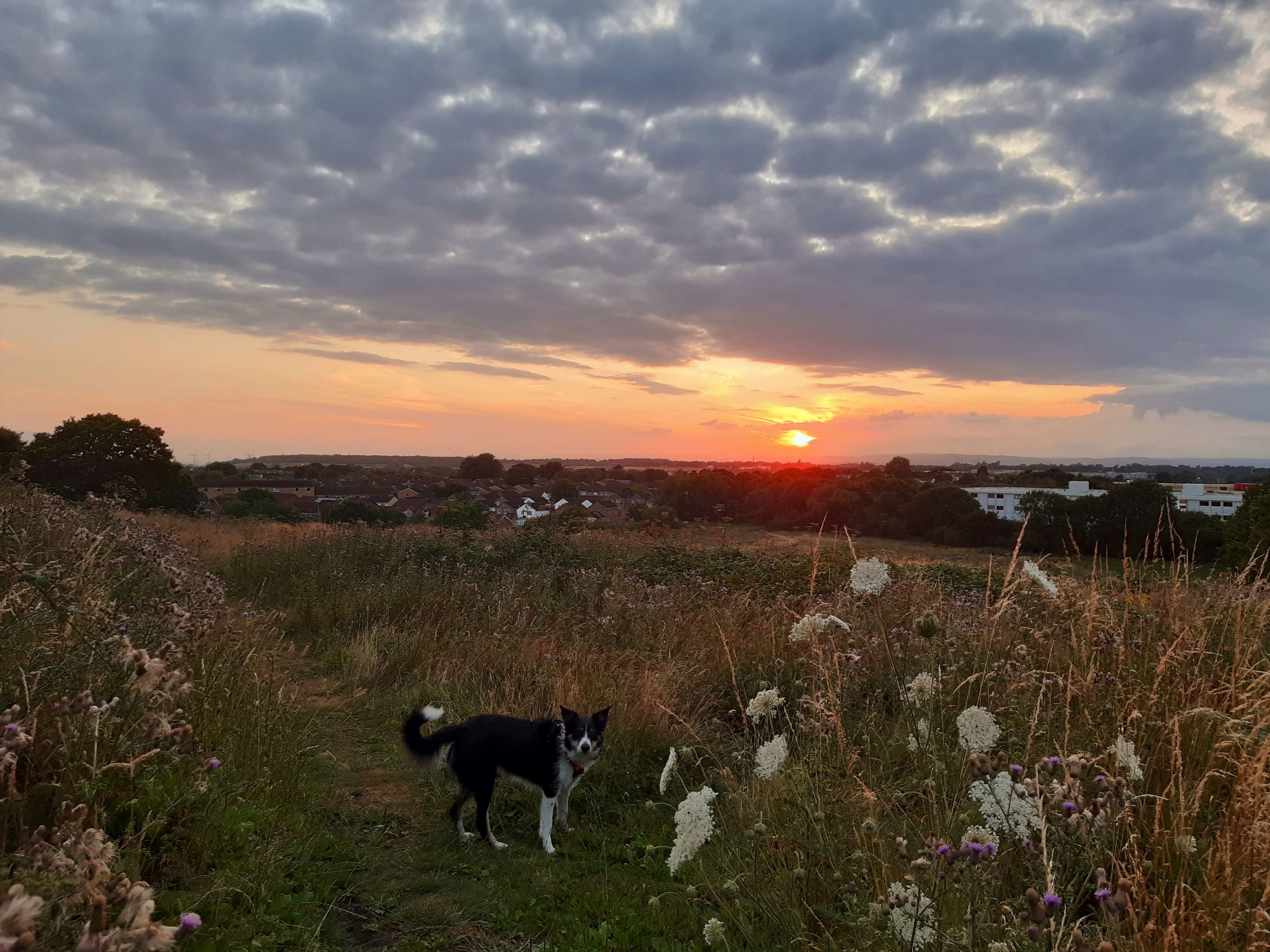
... but more usually up the field, with its oak and its view of Avonmouth and the hills of Wales. Always a good end to even the hottest day, although its progress along the tops towards the estuary shows how we're heading towards winter.


The sun in competition with the windows of the Mall at Cribbs Causeway


Saturday, 13 August 2022

Short walks in high heat


I didn't anticipate the heatwave back in May, when I arranged for Lewis, the plumber, to fit a new bathroom. Ooh, the summer holidays! I thought. I'll just go out on day trips with the dog for however long the job takes, to the seaside and Dartmoor, and to see friends on the canal, and to (re)visit lots of the places still on my places-to-visit list. Except that as I write, it's 32°C and forecast to get hotter still, and I'm slumped on the settee at home in a pool of sweat, while power ballads emanate from the traditional, plaster-encrusted transistor radio that accompanied the impressive number of tool boxes Lewis brought with him (see above). Cwtch might be a dog, but I'm not a man and neither of us are mad enough to go out in this.  

Except, of course, dogs do need exercise, especially collies, so we have been out, just very early in the morning, before it gets hotter than unpleasantly hot and sticky. One place I had to go was town to pick up a lampshade, so we took the opportunity to wander from Castle Green down to Brunel's Buttery on Wapping Wharf.


The Pride Progress crossing on Castle Street


View from Bristol Bridge


The Granary

I used to spend a lot of time on Spike Island when my kids were small, as my son who has autism was captivated by the boats and the water and the cranes, and above all, the harbour railway. It's nice to wander down there every now and then, and remember how he enjoyed it.


Looking back up to St Augustine's Reach and the Arnolfini

With the hike in temperatures, I've made efforts to take Cwtch to places that are going to be cooler-ish, by their very nature, which means woods. One of these is Badock's Wood, which nestles in a small gorge on the River Trym, and is an old favourite of mine. To get there you have to negotiate a field or two, which are currently so dry they crunch underfoot. 


Southmead round barrow


It's too hot up the top even for Cwtch and the crows to make much of a game of it. The temptation is to head down into the gorge as quickly as possible. Not that there's much of the River Trym to splash in (though I have seen it completely dry before now).


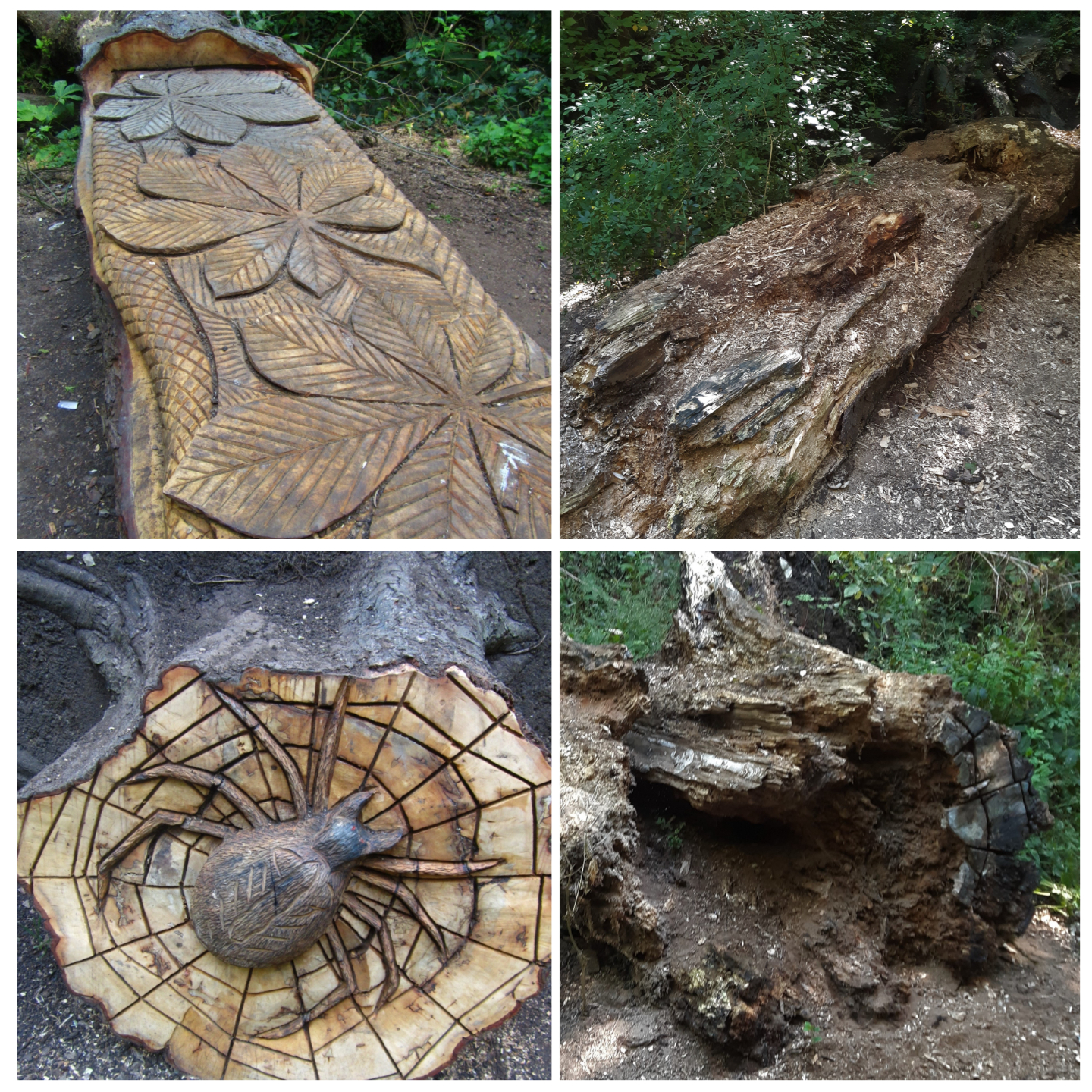
A sad thing is that the carvings we took so much joy in seven years ago, and then were dismayed to find damaged, have now been totally wrecked. You must surely be devoid of creativity and empathy to carry a chainsaw down to the wood and do this.


2015 & 2022

I've been visiting the lower part of the wood for years, but it's only comparatively recently that I've realised there's more to the fringe of trees that runs along the top of the gorge than I'd imagined.


Cyclamen 


It's a long way down!


There was a shrine in one part of the upper wood, with deflated balloons and dried up flowers. For all that there are some who prefer to destroy, others return to a place that's special to them and find solace there when they need it.                       

Saturday, 6 August 2022

Poetry-walking the poetry streets of Upper Horfield

Maybe we IsamBards were off our trolleys, holding a poetry walk through Upper Horfield estate on a hot August afternoon ...


... but it's something I'd wanted to do for ages. I first mentioned it to the Northerner probably back in about 2011, as a possible outreach event for one of the poetry festivals, but actually, I'd been fascinated by the poetry streets, where my father grew up, since I was a child. 

The Northerner's response back then was 'well, go ahead and organise it'.  I suppose I could use the excuse that the entire estate was being rebuilt at the time as an explanation for why it took so long, but the construction work was completed in 2013. Any delay was largely just a matter of me not pulling my finger out. 

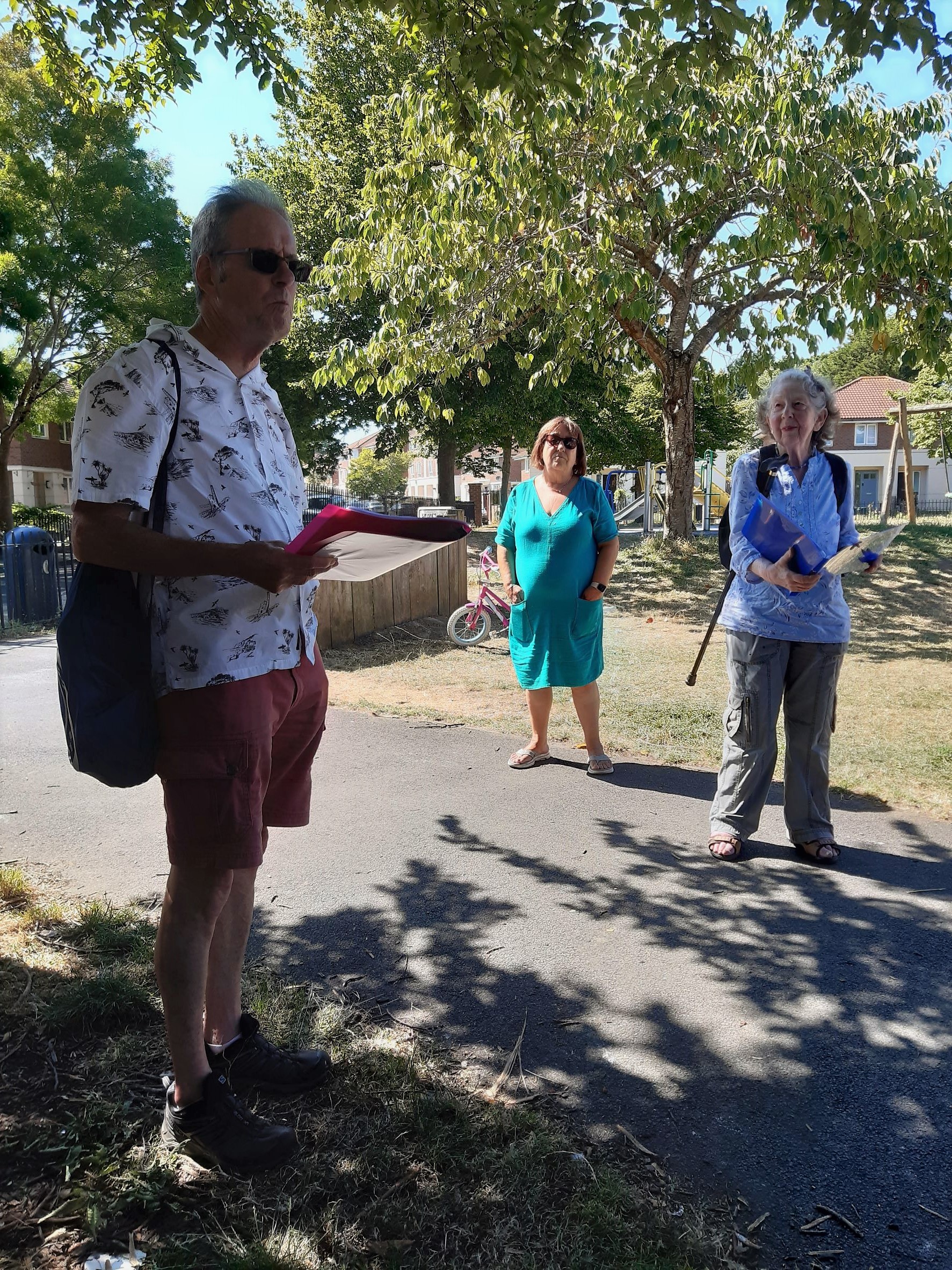
But finally here we were, in Poets Park, waiting for our audience - always a nerve-wracking moment. But they arrived, and what brilliant listeners they turned out to be. 


For the first time, in addition to our own work, we were reading poems by other, famous poets, namely those after whom the streets are named, as commemorating them was the main purpose of the walk. So in the park, which is on Eliot Close, we read 'The Rum Tum Tugger' from T S Eliot's 'Old Possum's Book of Practical Cats' and, as we were within earshot of  Larkin Place, Philip Larkin's melancholic poem, 'The Trees'. 


Our next stop was Auden Mead, near Keats Close.  The installation here, which was designed by local school children and is inscribed with lines from John Keats' memento mori, 'This Living Hand', took on a life of its own in the run-up to the poetry walk. I tweeted my indignation about the positioning of litter bin bang in front of it, making the poem impossible to read without getting a whiff of dog poo, and it was picked up by the Bristol Post, an interview ensued and suddenly Angry of Bristol's diatribe got some traction.* 

The obvious poem, then, to read at this point was 'This Living Hand', which is fragmentary and very moving, written in 1819 when Keats' health was failing as a result of TB. He was to die in 1821 at the age of 25. 


Since we'd just walked up Shelley Way, we also read a few verses from Percy Shelley's 'The Mask of Anarchy', with a rousing 'Ye are many - they are few!' to end it, while Dominic read W H Auden's 'Refugee Blues', which is more poignant and pertinent than ever. 


On then to a little grassy spot on Thackeray, via Shakespeare Avenue, which prompted some Bard-related poems, and, in anticipation of our walk down Hughes Gardens, David's poem about his mother-in-law going fishing on the River Exe with Ted Hughes. And as we were just a street away from Macauley [sic] Road, where my father grew up in the 1920s, I read a poem not by Thomas Babbington Macaulay but me, about my grandfather and father's experiences of the first and second world war respectively. 


Leading the stragglers

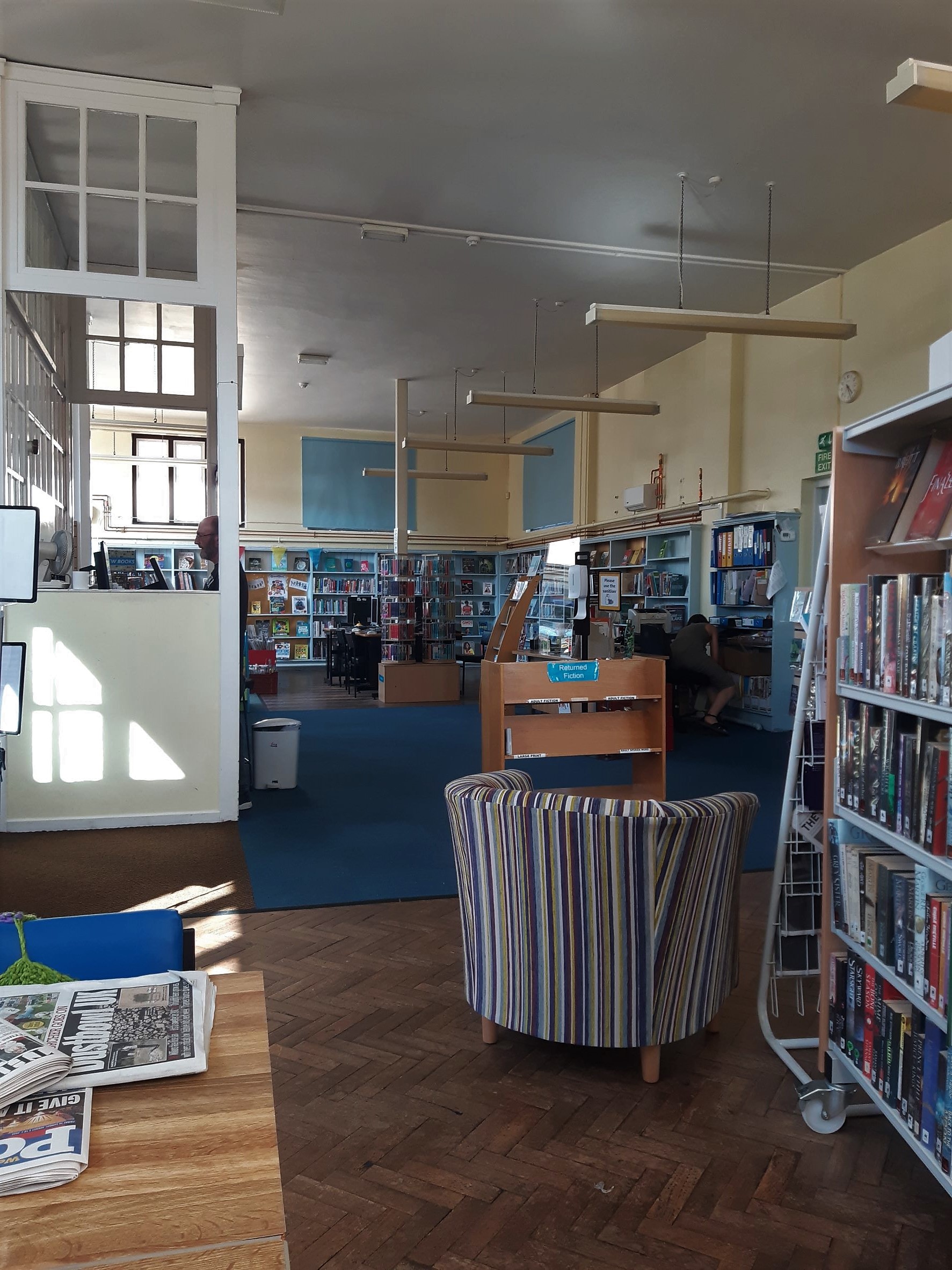
Our destination was Horfield Library on Filton Avenue, where there was tea and cake waiting, courtesy of the Friends of Horfield Library ... 


... and poems about Wordsworth and Coleridge, whose streets are somewhat further afield than the route of our walk permitted us to explore.  Coleridge was particularly relevant here, given that he used to make an 80 mile round trip on foot between Nether Stowey, north of Bridgwater, to his nearest lending library, which was in King Street, Bristol. Thanks to its Friends, Horfield library is still going and residents are spared that effort ... for now. 


If you think the Council should move this bin so that this installation and its poem can be appreciated properly, please contact its parks team. There’s a page on the council website called ‘Improve a park or green space.’ The name of the park is Auden Mead and you don't need to be a resident to make your suggestion.