Having glimpsed - but not climbed - the steepest street in England the week before last, we were now confronted with the second steepest - Old Wyche Road beween Lower Wyche and Upper Wyche, en route for the top of the Malvern Hills. We opted to drive to the pub in Upper Wyche instead.
Though the food's bog-standard, and a brick-coloured carpet with burgundy upholstery is always going to be challenging, the Wyche Inn serves Robinsons cider from Tenbury Wells and has amazing views, which make up for its shortcomings.
With lunch weighing heavily on my digestive system, we headed up through the village, which straddles the border between Worcestershire and Herefordshire ...
... taking, wherever possible, the road less travelled by, though there were people all over the place. This is no Dartmoor.
Nor had we cut out all the climbing. Here is Summer Hill.
Ravens over Herefordshire
Up ahead, Worcestershire Beacon, whence you can see - it is said - thirteen counties, three cathedrals and the Bristol Channel.
When we got there, we had a little sit down ...
... and a scratch.
I'd remembered the binoculars for once and the views were superb.
Looking ahead to Ludlow and Wenlock Edge ...
... over Great Malvern to Worcester, the magnificently named Lickey Hills and beyond there, somewhere, Birmingham ...
... to Bredon Hill and the Cotswolds ...
... and to the Bristol Channel and Black Mountains of Wales.
In the middle distance our destination - North Hill. Sugar Loaf Hill, in front and to the left, wasn't on the route I'd printed off the internet, but there was a group of adolescent ravens mucking about above it so that was a good enough reason to detour.
This is the view looking back at Worcestershire Beacon ...
... and ahead the wide col between Table Hill and North Hill. I'm supposed to be making for this, if I can get past the other one.
On the wide col, I remembered that the purse I'd left in the car because I didn't need money out on the hills also contained my spare camera batteries. But once we'd knocked off both hills, we'd done it - the way back was via the undulating paths around their sides.
And anyway, I still had my phone. This is Great Malvern from North Hill.
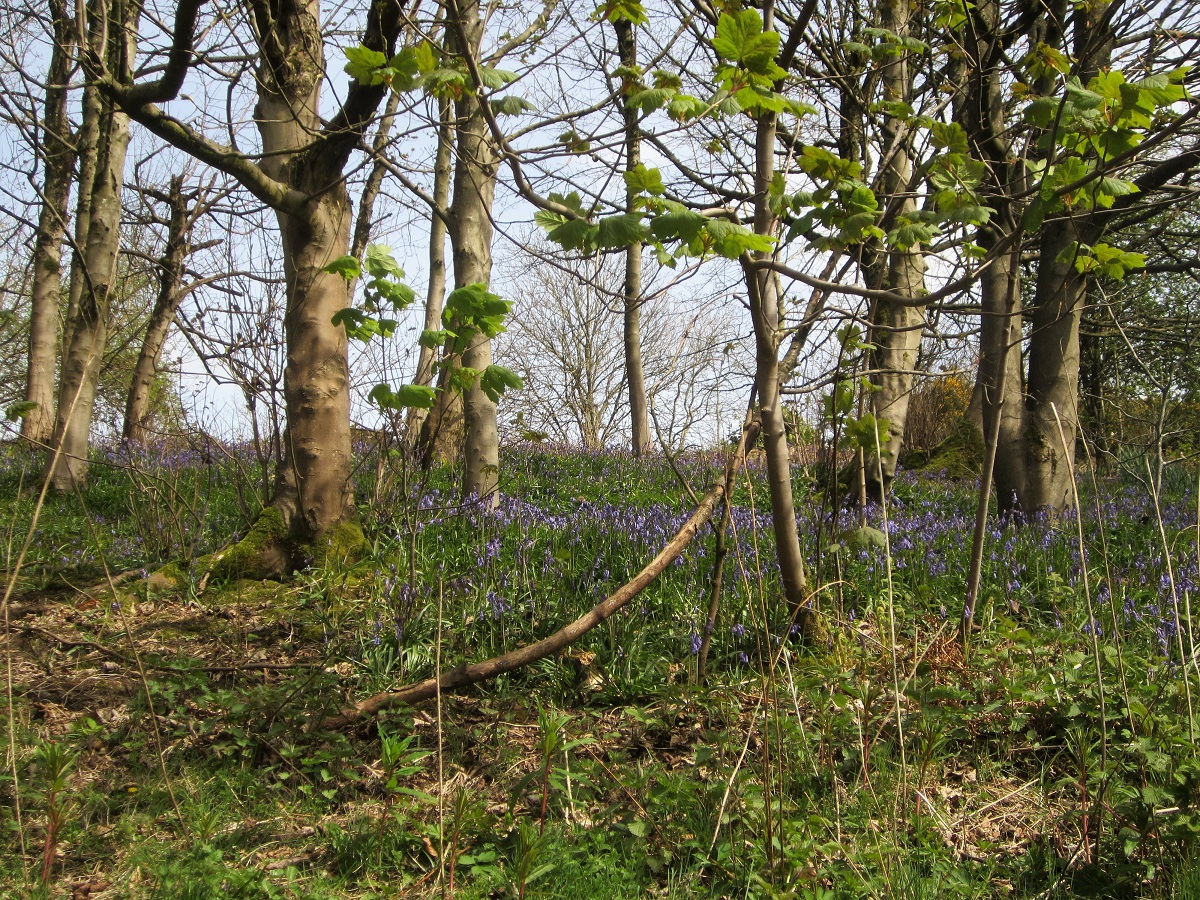
By now the sun was beginning to sink in the west, illuminating the trees dressed in their shifts of a thousand different greens.
'C'mon, Deb, it's time to go home.'
About Me
- Deborah Harvey Poetry
- Bristol , United Kingdom
- Poet and poetry facilitator. Neurodishevelled. My sixth poetry collection, Love the Albatross, is available from Indigo Dreams or directly from me.
Showing posts with label Great Malvern. Show all posts
Thursday, 13 April 2017
Wednesday, 12 April 2017
A Meander in the Malverns I : Great Malvern Priory
The Malvern Hills surge out of the Severn floodplain and dominate the skyline to the south and west of Worcester. For me, being hauled south on the M5 by the westering pull of my homing magnet, they are Almost Home But Definitely Not; a piece of the southernmost Midlands more mysterious and mystical for being so near and yet far far away.
Time, maybe, to make a first visit.
First, though, a quick dap around Great Malvern Priory. And before that, coffee in a convenable spot.
The bookshop is closed on Mondays and Tuesdays. Probably just as well.
The priory has a 'larger display of 15th century stained glass than any church in England', we are told. This foxed me a bit at first, on account of Fairford Church in Gloucestershire's 'only complete set of 15th century stained glass in England'. Can you get bigger than complete?
I suppose it all comes down to the size of the respective Churches.
The glass survived the Dissolution of the Monasteries because townspeople managed to raise the huge sum of £20 to buy the Priory from the Crown.
It survived the Cultural Revolution that was the Civil War because it was still surrounded by forest at this time and relatively isolated.
It survived World War II because the windows were removed and stored in zinc-lined boxes in a mine in Wales.
It didn't always survive the depredations of ivy.
Great Malvern's mediaeval glass is impressive, but for reasons of exuberance and imagination and picturesque demons and devils, I prefer Fairford's.
I fell in love with the modern, millennium windows, however, which were made by Thomas Denny and installed in 2003.
Inspired by Psalm 36 they are imbued with nature and, for me, almost pagan in feel.
The detail is exquisite ...
... and I loved the way the design merged with the surviving mediaeval glass in the uppermost lights.
But it wasn't just about the glass. I loved the mediaeval wall tiles too ...
... the wildly glamorous eagle lectern, seemingly feathered with leaves ...
... the rather severe-looking daughter kneeling at the feet of John and Jane Knotsford, where one might have expected a small dog or pet lion ...
... and the choir stall and misericord carvings.
Outside, the hills were making their presence felt. Time to get out on them ...
Time, maybe, to make a first visit.
First, though, a quick dap around Great Malvern Priory. And before that, coffee in a convenable spot.
The bookshop is closed on Mondays and Tuesdays. Probably just as well.
The priory has a 'larger display of 15th century stained glass than any church in England', we are told. This foxed me a bit at first, on account of Fairford Church in Gloucestershire's 'only complete set of 15th century stained glass in England'. Can you get bigger than complete?
I suppose it all comes down to the size of the respective Churches.
The glass survived the Dissolution of the Monasteries because townspeople managed to raise the huge sum of £20 to buy the Priory from the Crown.
It survived World War II because the windows were removed and stored in zinc-lined boxes in a mine in Wales.
It didn't always survive the depredations of ivy.
Great Malvern's mediaeval glass is impressive, but for reasons of exuberance and imagination and picturesque demons and devils, I prefer Fairford's.
I fell in love with the modern, millennium windows, however, which were made by Thomas Denny and installed in 2003.
Inspired by Psalm 36 they are imbued with nature and, for me, almost pagan in feel.
The detail is exquisite ...
... and I loved the way the design merged with the surviving mediaeval glass in the uppermost lights.
But it wasn't just about the glass. I loved the mediaeval wall tiles too ...
... the wildly glamorous eagle lectern, seemingly feathered with leaves ...
... the rather severe-looking daughter kneeling at the feet of John and Jane Knotsford, where one might have expected a small dog or pet lion ...
... and the choir stall and misericord carvings.
Outside, the hills were making their presence felt. Time to get out on them ...
Subscribe to:
Posts (Atom)


