

I've been to a couple of exhibitions lately. One was at Ditchling Museum of Art and Craft, which I'd wanted to visit for ages, having been a devotee of the Arts and Crafts Movement for years.
Of course, the difficulty with the Ditchling artists' community, which flourished from 1907 to 1924, is its association with Eric Gill. (I still admire his art, even though we now know he was a child rapist.) It turned out, though, the museum was showcasing eight mural panels from Frank Brangwyn's The Skinner's Hall murals, which was altogether more acceptable.
The murals were commissioned in 1901 to decorate the dining hall of the Court of the Skinners' Company ('above the oak panelling'), but which were delivered late on account on Brangwyn's apparent inability to refuse a commission. It was 1937 before the job was completed.

Here's one of my favourite details, from 'Education'. Apparently, Donald Sinden, who grew up in the village, was the model for one of the pupils in the mural.
We also had a wander around the village, which is full of endearing buildings.

Bank House on the right

Crossways, formerly Catlands, c16th century


This is Wings Place, also known as Anne of Cleves House, having been given to her as part of the marriage annulment (though she never stayed there). The current house appears to be mainly 16th century.

The Ditchling war memorial project was overseen by Eric Gill. The lettering, carved by Joseph Cribb, proved impossible to photograph with my phone in brilliant sun.
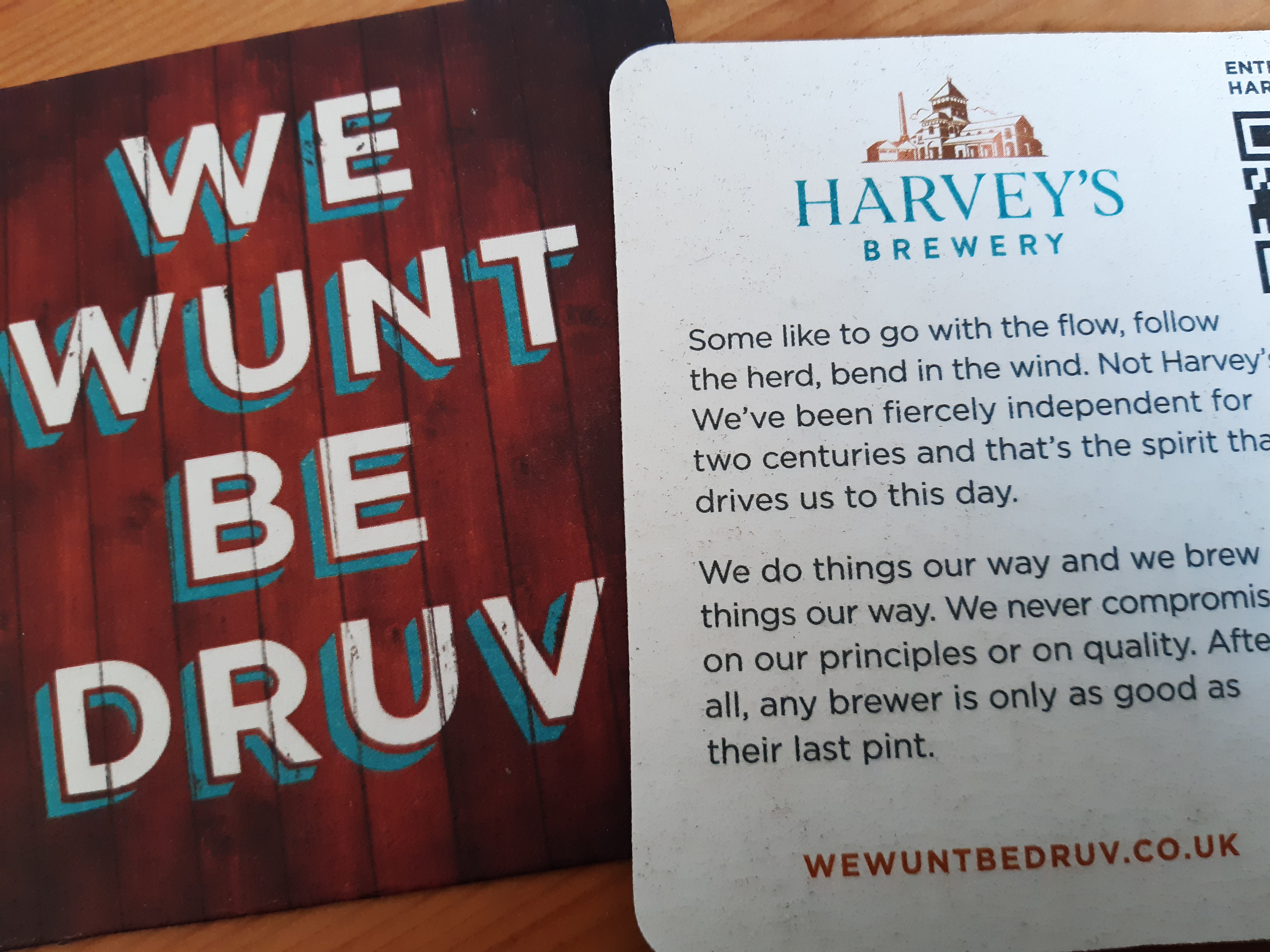
We had lunch in the White Horse, which serves Harvey's beer. When she saw my name, the landlady very kindly gave me a stash of unsullied beer mats with the brewery's strapline (and unofficial motto of Sussex) 'We wunt be druv'. Sounds good to me.

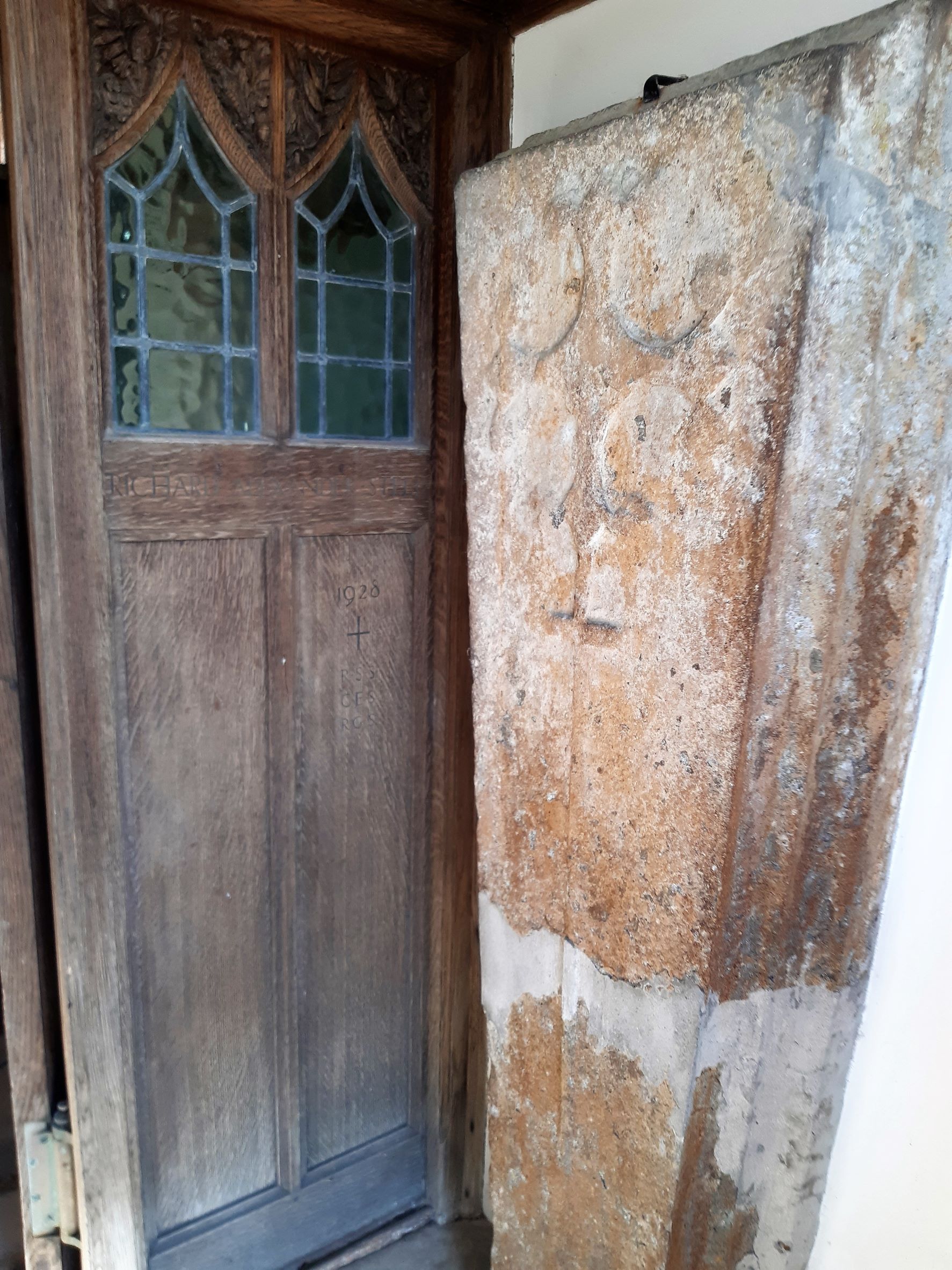
After lunch, we visited the oldest building in the village, which is the Church of St Margaret of Antioch, the lower walls of which are Saxon, with the remainder dating mainly from the 12th and 13th centuries. I loved the simplicity of the interior ...


... and the 13th and 14th century stone slabs in the porch.


The sun dial in the churchyard, designed and carved by Gill
Day trips to Sussex are necessarily flying because of the amount of driving involved, but one day I'd like to return to Ditchling for a more leisurely study of the headstones in the churchyard, some of which are very finely carved.
A few days before my Sussex sojourn, I'd visited an inspirational exhibition closer to home, in the Park Street vestibule of Bristol's Council House. Entitled Folklore, it comprised a series of drawings by Katie Marland, the hugely talented daughter of my friend, Dru Marland.
Having an interest in the old stories, I'd been really looking forward to seeing it, and as I'd suspected, it was fascinating. I especially loved the Mari Lwyd, which I first met in the flesh - so to speak - when on a jaunt to Crickhowell with Dru back in 2016 ...

... the Barghest, which frequents the lanes of Suffolk but is definitely a cousin of the black dogs of Devon ...

... Black Annis, of Leicestershire, who skins and eats children and lambs ...

... and the Hairy Hands, which are definitely of Devonshire origin, being associated with the stretch of the B3212 that run between Two Bridges and Postbridge on Dartmoor.

Indeed, since ending in Bristol, Katie's exhibition has made its way to the Folklore Library and Archive in Crediton, Devon, and is well worth seeing.
Having spent part of the afternoon in such company, it was perhaps fitting that the waning moon that evening was decidedly strange, appearing to get stuck in the top of my neighbour's weeping birch, and reflected so weirdly in the cloud that it resembled the head of a child's doll.
Having spent part of the afternoon in such company, it was perhaps fitting that the waning moon that evening was decidedly strange, appearing to get stuck in the top of my neighbour's weeping birch, and reflected so weirdly in the cloud that it resembled the head of a child's doll.


