About Me

My photo
Bristol , United Kingdom
Poet and poetry facilitator. Neurodishevelled. My sixth poetry collection, Love the Albatross, is available from Indigo Dreams or directly from me.
Showing posts with label Iffley. Show all posts

Saturday, 10 August 2024

To Wing and Watlington Hill

Finding myself in Oxfordshire with nine hours to fill while Son the Elder went roboteering, I headed over the border into Buckinghamshire. My destination was the village of Wing, where there's a Saxon Church, All Saints, which is believed to have been built between the 8th and 11th centuries, making it one of the oldest surviving churches in the country.


Parts of the Church which have survived from this time include this fully-preserved 9th century apse, the only one in the country; also, a Saxon window in the east wall, the 9th century triumphal arch between the apse and the nave, and the nave with its huge pillars.  


The oldest part of the church is the 8th century crypt, although I didn't get to see that.

There are also features from later centuries, forming a fascinating palimpsest. Traces of mediaeval wall paintings, for example ...


... and a beautiful 15th century roof, carved with angels and other figures, and reminiscent of others I've seen in Somerset, Dorset and Wiltshire, the fine detail of which both my eyes and my phone failed to capture.


There's a much better photo of it on Wikipedia.

There are also some impressive tombs and memorials, many of them commemorating members of the Dormer family. 


Tomb of Sir William Dormer (dd 1575)


Tomb of Robert Dormer, 1st Baron Dormer (dd 1616)

My favourite is Sir Robert Dormer's tomb, that is, the Sir Robert who died in 1552 and was buried as 'a great sheep-master in Oxfordshire'. Which must make these beautifully carved creatures sheep, I should imagine, rather than the cattle I thought they were at first. 


Memorial to Lady Anna Sophia Dormer, who died of the small pox in 1695 


Honest old Thomas COTES, that somtime was porter at Ascott Hall, hath now (alas) left his key, lodg, fyre, friends and all to have a roome in heaven. This is that good man's grave. Reader, prepare for thine, for none can tell but that you two may meete tonight, farewell. He dyed the 20th of November 1648

Having left Wing, I headed back over the border into Oxfordshire, making for Watlington Hill, where red kites are to be seen. On the way I stopped off in briefly in Bledlow and Crowell to photograph a couple of empty pub signs.


The former Corner House, Bledlow


The former Shepherd's Crook, Crowell

Every summer should include at least one walk on calcareous grasslands, and Watlington Hill is a lovely example.


Here are just a few of the flowers I saw:
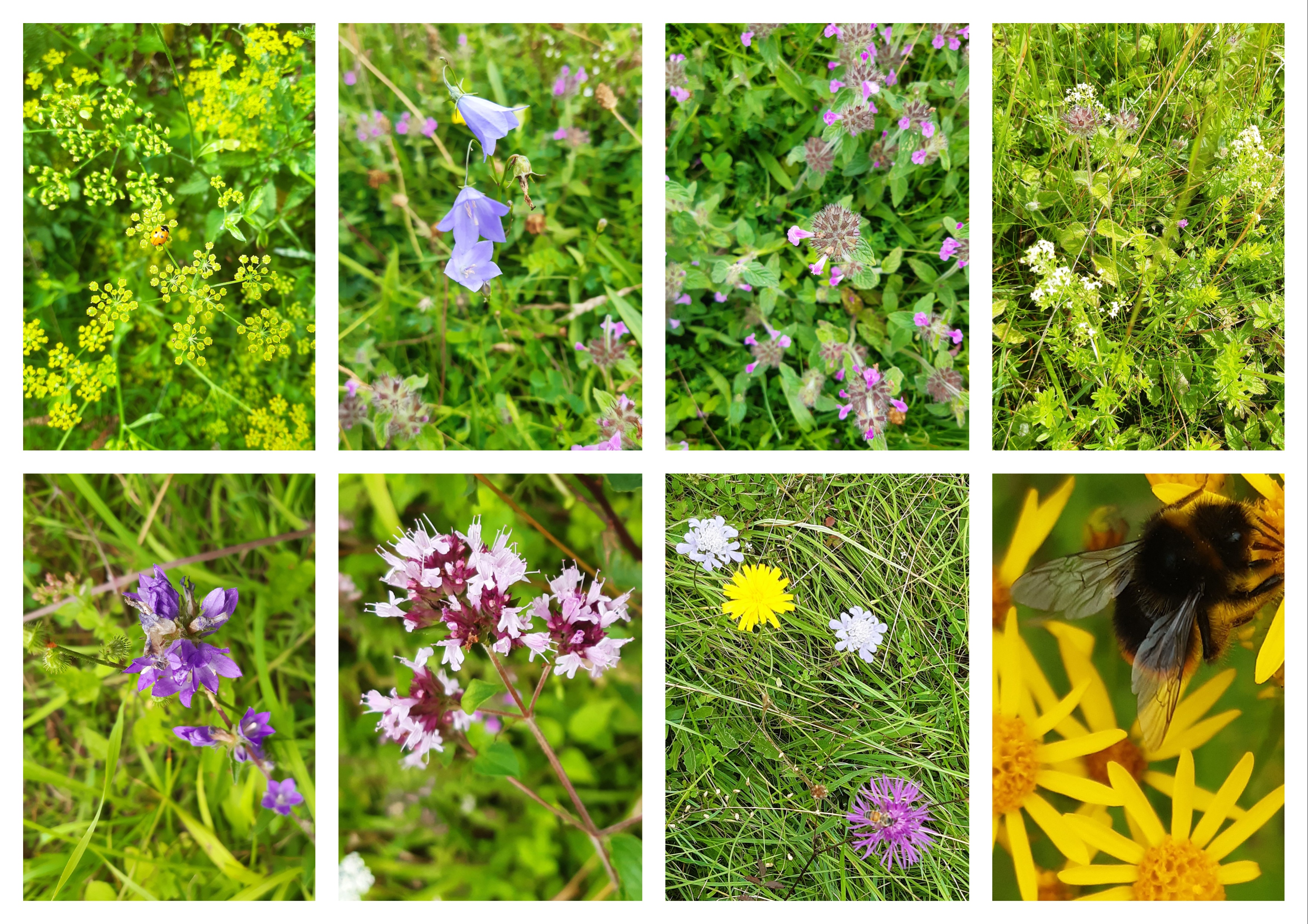

CLOCKWISE from top left: ladybird on wild parsnip; harebells; wild basil; hedge bedstraw; buff-tailed bumble bee on ragwort; scabious, hawkweed and knapweed with honey bee; oregano and clustered bellflower 


A clootie tree  in a circle of yews, which in the past were used as a natural memorial for the Esher family who once owned the land


Looking north-west to Watlington and the horizon

It was warm so I sat on a bench and watched the red kites that had been promised and duly materialised. It was so lovely to hear their strangely haunting whistling, for the first time since we went to the kite-feeding station at Bwlch Nant yr Arian last summer.


The return route around the top of the hill took me through some yew woodland ... 


... and along a pretty chalk track running parallel to a sunken and somewhat overgrown drovers' path.


Having dipped down, I laboured back up the hill, pausing and looking back every now and again, this time with views of the Vale of Oxford.


There were a couple more fairly close encounters with a red kite ...


... and two ceps which were far too elderly to be edible. 

I still had an hour and a half to spare before I picked Son the Elder up, so I drove to Iffley, which is quite near his roboteering venue, to wait it out, having realised after our visit to the church in May, that I hadn't paid enough attention to its ancient yew tree, which is believed to be at least 1600 years old and stands near its south-east corner. 


The oldest tree in Oxfordshire


Holly tree

Back in Botley, I picked up a deeply satisfied Son the Elder, whose robots had won a side competition and come second in the main event. An all-round good day. 


Sunday, 19 May 2024

All the birds of Oxfordshire and Gloucestershire (and Warwickshire)

Son the Elder was roboteering just outside Oxford and needed chauffeuring, so the Northerner and Cwtch the Collie joined us, on our trip to visit the places we failed to see last November, when we were making the same journey and my car broke down en route.


After dropping my son off in Botley, we headed for St Edward's in Stow-on-the-Wold, mainly to see the famous door in the North Porch, which is flanked by two three-hundred-year-old yews and said to have inspired Tolkien when he was writing about the Doors of Durin in 'The Fellowship of the Ring'.


I'd hoped to linger and take some photos of the Northerner here because he loves 'The Lord of the Rings', and maybe get him to take a possible author photo of me for my forthcoming poetry collection, but there was a constant stream of visitors rounding the corner to pay homage to The Door, so we didn't linger. 

Inside the church the things that interested me most were the remaining traces of mediaeval paintwork on the south side of the sanctuary ...


... and a splendid ledgerstone to the sacred memory of Sir Hastings Keyt, a Royalist who died, aged 23, in 1645, during the last battle of the first Civil War just outside Stow-on-the-Wold. 


I particularly like the detail of the skulls. 


In the churchyard there's a memorial to the battle itself, which saw 1000 Royalists held prisoner in the church ... 


... and also in the nearby square, scene of the slaughter of 200 Royalists and of the surrender of their commander, Jacob Astley, 1st Baron Astley of Reading. 


After lunch at the Porch Inn, which apparently dates back to 975AD and is another of those pubs claiming to be the oldest in the country, we set off for Adlestrop to pay homage to Edward Thomas, poet and wanderer, who wrote his famous poem about a brief, unscheduled stop at the railway station in 1914 just a couple of years before he died during the Battle of Arras in 1917. 

The station fell victim to the infamous Dr Beeching's axe in 1966 and is no longer standing, but the railway sign is ingeniously displayed in the local bus shelter, along with a plaque inscribed with the poem, which we read aloud, of course, in homage.


After our similarly fleeting stop, we headed for the Rollright Stones, which stand right on the Warwickshire/Oxfordshire border, not that the border existed when they were set up from the 4th to the 2nd millennium BC.

The earliest of the stones are believed to be the Whispering Knights - actually the remains of an early or middle neolithic dolmen. 


Chronologically, the next stones in the complex are the King's Men, a stone circle more than 100 feet in diameter and apparently comprising 77 stones, although how anyone can state that with any certainty is beyond me, for as we all know, counting standing stones accurately is impossible.


the Clootie tree by the King's Men


The most 'modern' of the Rollright Stones is the King himself, just over the road in Warwickshire and a sinuous curved shape thanks to the tradition earlier visitors and drovers had of chipping off parts of the stone as good luck charms. 


'Seven long strides shalt thou take 
and if Long Compton thou canst see, 
King of England thou shalt be'  

said the witch in the Early Modern folk tale attached to the site, and on the King's seventh stride a mound rose up blocking the view, and the witch turned them all to stone:  the king becoming the King Stone;  his army the King’s Men;  and his knights the Whispering Knights, forever plotting treachery.


daisies and corn speedwell; ground ivy; harlequin ladybird; hairy chervil and red campion; speedwell and stitchwort; red and white campion; butterbur leaves; hen pheasant feathers

Having wanted to see the door of the church in Stow, and the Adlestrop railway sign, and the Rollright Stones ever since I lived in Banbury 35 years ago, I was in a very buoyant mood as we headed for Cumnor, the Northerner's choice of destination, having studied Matthew Arnold's 'The Scholar Gypsy' for A-level, but having had a necessarily swift drink in a truly awful, unwelcoming pub and failed to find the Cumnor Hills, we soon moved on to the nearby village of Iffley. This has a church I was keen to visit, being Romanesque in style and dating from the 1160s. 


Beakhead ornamentation on the West Door


The South Door


Carving of a King by the South Door


the ancient Iffley yew


white and blue forget-me-nots


This sculpture in the churchyard reminds me of work by Peter Randall-Page but I haven't been able to find out who carved it.

The first thing I noticed as I stepped inside the church was the 12th century font in the baptistry, with its mismatched leg, the result of an ancient repair job, and its striking lid that dates from 2014 ... 


... and then the two beautiful, modern stained glass windows on either side of the space.

The Nativity window was designed by John Piper and made by David Wasley, and was installed in 1995 as a gift from Piper's widow, Myfanwy Piper. 


Cockerel: Christus Natus est
Goose: Quando? Quando?
Crow: In hac nocte
Owl: Ubi? Ubi?
Lamb: Bethlem! Bethlem!


detail, Piper window

The second window, designed by Roger Wagner and installed in 2012, continues the theme of the Tree of Life, with Christ crucified.


looking up through the nave, tower and chancel to the altar


The sumptuously carved stone was reminding me of Bristol Cathedral Chapter House, which is probably my favourite space in all of Bristol, and when I got home, I checked the date and discovered it too dates from 1160.


 the altar


one of many delightful carvings, this one a bird on its nest


It was time to go to the pub, for a swift drink before picking Son the Elder up and driving back to Bristol, but before I left, I resolved to return to St Mary's, Iffley next time I'm in that area, and stay a little longer.


I really love you, I do ... [hic]