About Me

My photo
Bristol , United Kingdom
Poet and poetry facilitator. Neurodishevelled. My sixth poetry collection, Love the Albatross, is available from Indigo Dreams or directly from me.
Showing posts with label Kilpeck. Show all posts

Sunday, 24 September 2017

Samuel Palmer at Chew Valley Lake and Compton Martin


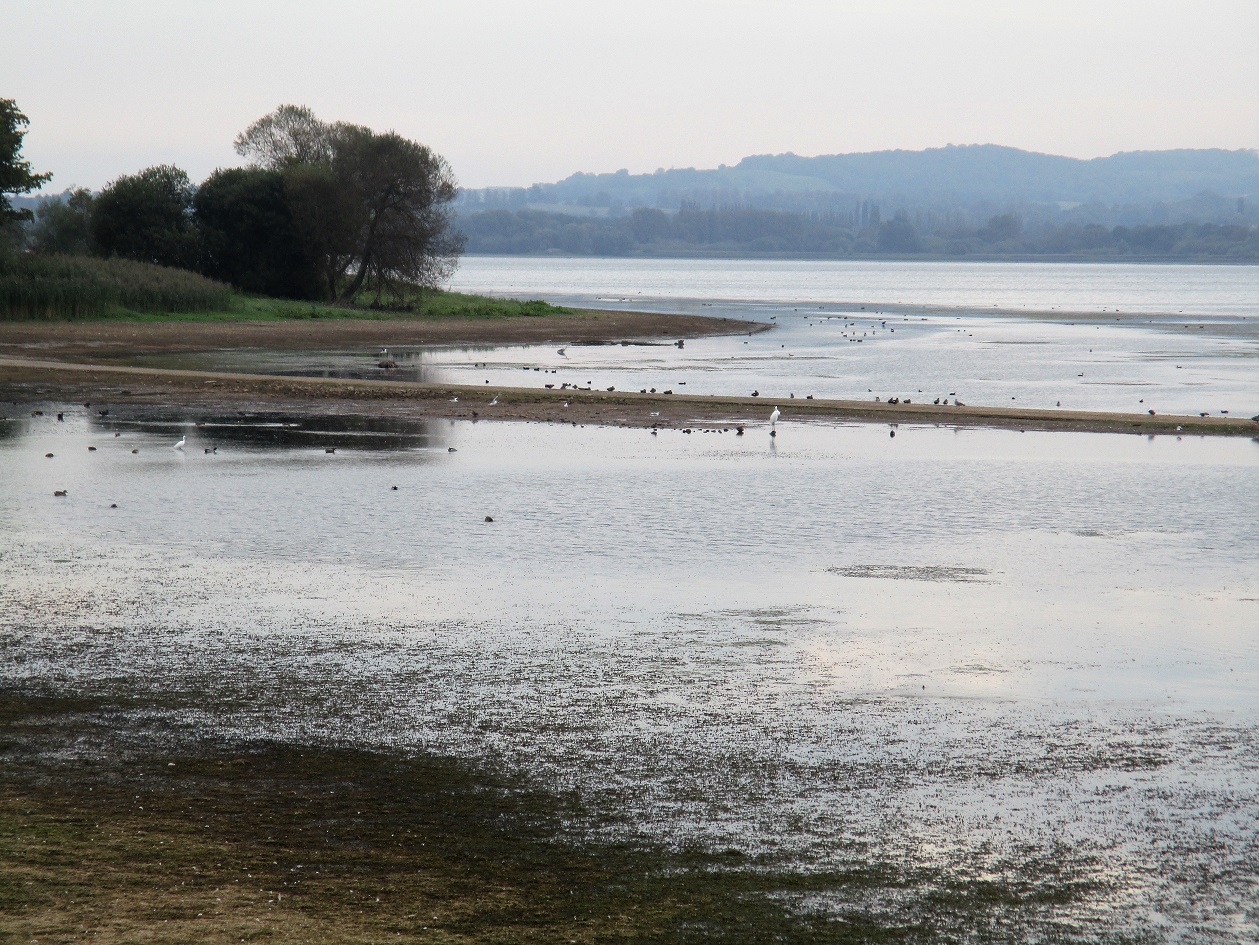
The plan was to drop Son the Actor off on set and - given that I'd only picked him up from there six hours earlier - return home for a nap. But the glimpse of the lake from the causeway with reflections like marbled endpapers looked so beautiful ... 


... that somehow I found myself parked up at Herons Green Bay, watching egrets. Which weren't quite as exciting as the badger and two foxes we'd encountered on our home journey during the night, but pleasing all the same. 


And the sun bursting through cloud wouldn't have disgraced a painting by Samuel Palmer. 


I decided to pop to nearby Compton Martin and see if the village Church, called - possibly slightly confusingly - St Michael and All Angels was open. (Apparently, Martin comes from Robert Fitz Martin, who inherited the Manor from his grandfather during the reign of Henry I.)  


Clearly it was  still too early, which was a shame as it's one of only three surviving Norman churches in Somerset. Nevertheless, there was enough of interest on the outside of the building to ensure I'll be back down to see the inside in the by and by ... 


... like the carved corbels on the clerestory that so reminded me of the (rather more spectacular) ones at Kilpeck in Herefordshire. 

Can't quite make them out?


I'll take some better photos next time. 


Friday, 24 June 2016

Lulworth Cove and Durdle Door - Snatching Defeat from the Jaws of Victory

My father announced some years ago now that he would like to visit Lulworth Cove and Durdle Door in Dorset, a desire he's often repeated since.  I've lost count of the number of times I've offered to drive him there but he's always had a reason not to go - too cold, too wet, too hot, too pretty much anything really.  To which he'd add, 'There's plenty of time'.


I began to think that I would never get him there, and that when I did eventually visit myself, maybe after his death, I would be consumed with guilt at my failure, even though I'd know I'd tried my hardest.  Three years ago, I even wrote a poem about not taking him to Lulworth Cove.

When my sister announced that she and her husband would be taking the parents on holiday to Dorset, I heaved a sigh of relief. Far easier to herd them there from a distance of six miles. And I could go down too, and spend the day with them.

So as soon as I'd cast my vote in the EU referendum, I set off. It was a good day for a jaunt, beautiful in a grey sort of way, as this country so often is. And despite worries about which way the vote would go, I was glad I was finally going to cross Lulworth Cove off the List of Places To Take My Parents.

Except that they are 94 and 88 now, and their mobility is poor.  The Cove proved too far for them to walk to from the pub by the car park. There was no vehicular access, not even to drop them off.  And the wheelchair I bought when I broke my leg, in the hope they too would get some use out of it, was 100 miles away, right at the back of their cupboard under the stairs, rejected.


So it was just me, my sister, my brother-in-law and their large and exuberant puppy who saw this.


We wondered if there was a way of seeing the shore from the cliffs. There'd be panoramic viewpoints, right? My sister went into the Tourist Information Centre. Nope, no way of seeing the Cove or Durdle Door from the cliffs without trekking quite a way. 'How are they at walking over grass?'


We drove up there anyway.  Rooks watched carefully to see how we were going to resolve this.  We made preliminary forays along various paths to see if they were worth a try. They weren't.


In the end only my brother-in-law, the dog and I made it down to the beach to get a proper look.


And it was beautiful ...


... Durdle Door to the left, Durdle Cat Flap to the right, with waves like perfectly scalloped lace. 
Leaving my sister pondering the possibility of hiring a wheelchair and returning the next day, I bade the merry band of holidaymakers farewell and headed for home. On the way I stopped off at Bere Regis and had a look around the stone and flint Church of St John the Baptist.  


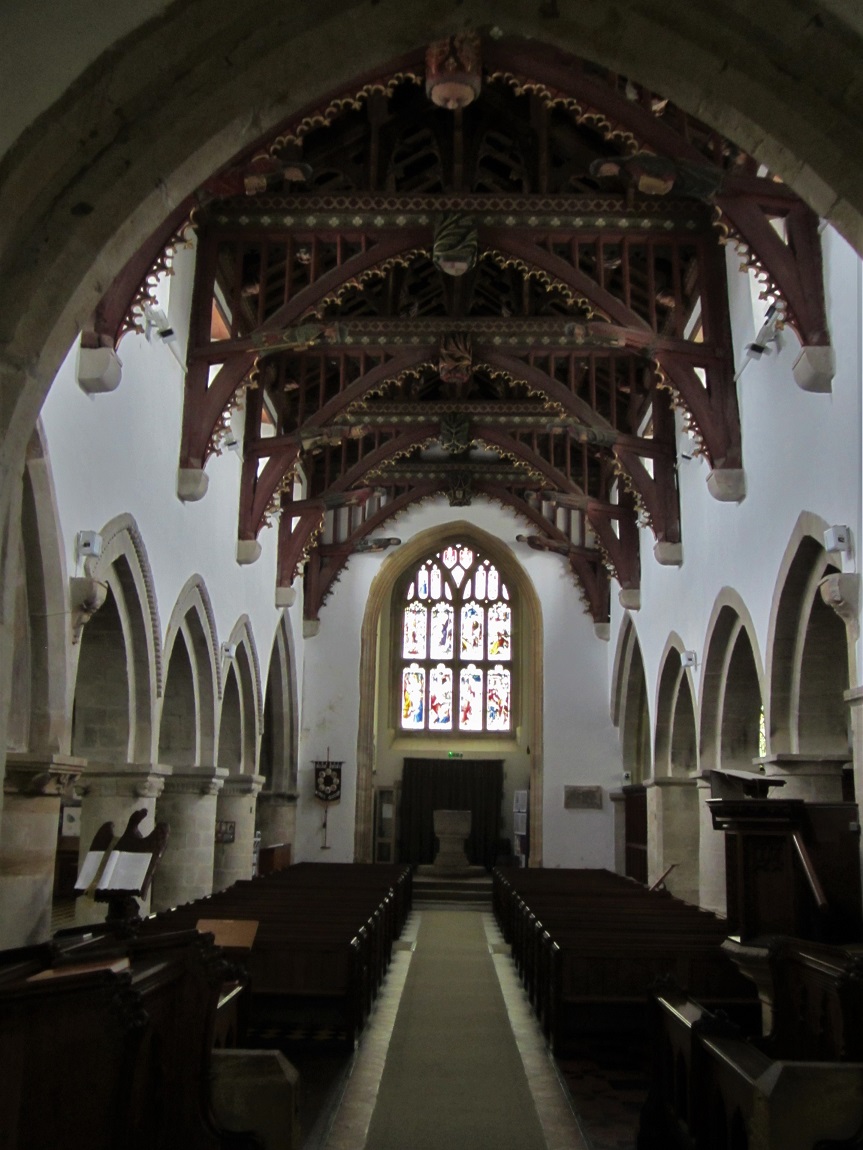
There are some churches you go inside, look up and marvel - Muchelney is one, as are Martock, Long Sutton, and the Church of St Thomas and Edmund in Salisbury - and now there's another to add to the list.

Constructed in about 1485, the carved figures on the nave roof are believed to depict the twelve apostles. There are also huge bosses and carved heads on the wall plates between the trusses.


Meanwhile in the chancel there are angels.
The stone altar was discovered buried under the chancel floor in the 19th century, having been put there at the time of the Reformation to avoid destruction.  It's now hidden away under embroidered drapery.


I loved the 12th century carvings on the pillars of south side of the church, especially the ones of man with headache and man with toothache.  


They reminded me of the sheela-na-gig at the Church of St Mary and St David, Kilpeck in Herefordshire, which was built around 1140. 

Time was getting on. Tempting as it was to visit Shitterton, Piddlehinton and Piddletrenthide, I decided they must wait for another day, and it was as well, as an accident outside Dyrham Park meant that it took me over an hour to travel the last five miles up to the Bath junction of the M5. 

Sitting in my car looking over verges of long golden grass and poppies to a sky with clouds layered like the side of a Walls Viennetta which someone took from the packaging too hastily and smudged with their thumbs, I thought how beautiful this island is and how much I love it, and I hoped so hard that its people would not vote to turn their backs on our neighbours and close borders and minds. 

Meanwhile three men in the car in front tipped their rubbish out through the window. 


The AA New Book of the Road


He has abandoned
his forties atlas of the world,
the one that takes him back

to Castel Benito, Tripolitania, the capital
city of old Brindisi,
Palestine.

Instead he’s tracking the A37,
planning advances on
Lulworth Cove and Durdle Door, 

the skin on his finger paper thin,
the back of his hand a Spaghetti junction
of knotted highways.

Let’s go tomorrow
I say quickly. No rain forecast.
Some sunshine. 

We’ll wait till it’s warmer
he decides.  No need to rush.
There’s plenty of time.

© Deborah Harvey 2014 

Wednesday, 17 October 2012

And Did Those Feet ..


I  love footpaths, towpaths, ash paths, cinder tracks, trails, trods, green lanes, deep lanes, sunken lanes, alleys, wynds, meanders, rides, byways, bridleways, holloways, lychways, rights of way, thoroughfares, droves, sheeptracks, rabbit runs. Every sort of path apart from psychopaths, in fact.  


The best paths are those that the land remembers, that aren't even marked on maps.  They don't belong to us; we belong to them.  


The Path

Running along a bank, a parapet
That saves from the precipitous wood below
The level road, there is a path. It serves
Children for looking down the long smooth steep,
Between the legs of beech and yew, to where
A fallen tree checks the sight: while men and women
Content themselves with the road and what they see
Over the bank, and what the children tell.
The path, winding like silver, trickles on, 
Bordered and even invaded by thinnest moss
That tried to cover roots and crumbling chalk
With gold, olive, and emerald, but in vain.
The children wear it.  They have flattened the bank
On top, and silvered it between the moss
With the current of their feet, year after year.
But the road is houseless, and leads not to school. 
To see a child is rare there, and the eye 
Has but the road, the wood that overhangs
And underyawns it, and the path that looks 
As if it led on to some legendary 
Or fancied place where men have wished to go
And stay; till, sudden, it ends where the wood ends. 

Edward Thomas