About Me

My photo
Bristol , United Kingdom
Poet and poetry facilitator. Neurodishevelled. My sixth poetry collection, Love the Albatross, is available from Indigo Dreams or directly from me.
Showing posts with label chalk. Show all posts

Thursday, 2 July 2026

Hill fort fever: Barbury Castle

Over the last few years, I've developed new loves in the landscape. One is the Ridgeway, a 5000-year-old track that starts at Avebury and ends 87 miles away at Ivinghoe Beacon in Buckinghamshire. I've only walked a couple of short sections of it, from Avebury to West Kennet long barrow, and from the Uffington White Horse to Wayland's Smithy, but it is a place of chalk and magic and I would love to walk its entire length (but know I probably never shall). 


The Ridgeway at Barbury Castle


The other love has come upon me incrementally, and those increments are called Blaise Castle, Brackenbury Ditches, Bratton Camp, Brent Knoll Camp, British Camp, Bury Hill Camp, Caerleon Hill Camp, Cam Long Down, Castle Ditches Camp, Coney's Castle, Hembury Hill Fort, King's Weston, Lambert's Castle, Leckhampton Camp, Lydford Fort, Maes Knoll, Old Sarum, Small Down Camp, Stokeleigh Camp, Twmbarlwm, Uffington Castle, Wain's Hill ... and others, I'm sure, that have slipped my mind. The hill forts I've encountered on my walks, once a source of interest, now a passion. 


Barbury Castle with the Ridgeway running through it


I don't know what it is about hill forts, but they seem to me to be the thinnest of places, as if the people who lived there and defended them thousands of years ago are still just a heartbeat away


So when my daughter needed driving from Bristol to Swindon for an event, I decided to take the dog on a walk somewhere up near there for a change, and as I'd long wished to visit Barbury Castle, which is a few miles south of Swindon and combines hill fort mystique with Ridgeway delight, that's where we went.


Barbury castle has two distinct rings - even three in places - and the size of it means that you can do a walk of a fairly decent length for an elderly woman and a little collie who's approaching middle age and has never really had a work ethic, just by roaming around them, with the added advantage of not getting lost (except in your imagination).


The photos make it look like Cwtch and I had the place to ourselves, but we didn't.  When we arrived the car park was full of teenagers with unfeasibly large rucksacks, but they headed off elsewhere and that was a relief. (For me to derive a degree of self-regulation from my walks, they need to be quiet.) 

But as soon as we got to the fort, it became apparent there were a lot of cyclists coming through ... streams of them, in fact, on a route along the Ridgeway marked by day-glo orange flags. Maybe next time we go there - I would love there to be a next time - we'll choose a week day!


My wildflower ID app - I'm not very good at orchids - identified variously, as broad-leaved marsh orchid, heath spotted orchid and common spotted orchid, what I think were probably all examples of the same species. I suspect we can discount the marsh variety. It's a spotted one, but I'm not sure which.


Top row: orchids of some description, yarrow, scabious, salsify

Middle row: meadow cranes bill, lady's bedstraw, bird's foot trefoil, yellow rattle, small burnet, yellow mignonette

Bottom row: wild carrot, thyme, thyme-leaf sandwort, rough hawkbit, nodding plumeless thistle, creeping cinquefoil


CLOCKWISE FROM TOP LEFT: Meadow brown on hawkbit, thick-legged flower beetle on hoary plantain, marmalade hoverflies on hogweed, a painted lady, six-spot burnets on bird's foot trefoil


The Ridgeway


Sunday, 7 September 2025

Visiting the White Horse and its Blacksmith

The situation was agonising to say the least. I'd just dropped Son the Elder off in Oxford for a day of roboteering when my left shoulder - the nominally non-impinged one, which had been muttering under its breath since the previous day, but which I'd chosen not to indulge - decided to have a full-on tantrum, with pain shrieking down my arm and into my wrist and hand. Luckily, StE managed to arrange an alternative lift for the home leg, which meant I wouldn't have to hang around all day. I still had to drive the seventy miles back home, though, which promised to be tortuous.

Back in the sunlit uplands of pre-pain, I'd planned a tour of churches with connections to the Arts and Crafts Movement, followed by a walk along the dream-road that is the Ridgeway to Waylands Smithy, which I'd never visited, despite having paid my respects to the Uffington White Horse on several occasions. I decided the churches could bide their time for now, but since the White Horse car park was more or less en route, why not break my journey and give my arm a bit of a rest by doing that part of my itinerary? 


The ancient Ridgeway is a track running from Overton Hill near the West Kennet long barrow in Wiltshire to Ivinghoe Beacon in Buckinghamshire. Son the Younger and I walked the southernmost end back in January 2020, with our old dog, Ted.

Somehow, despite running through the heart of Southern England, it manages to be quite remote, and has many ancient archaelogical features along its length, including numerous hill forts to defend what was an important trading route, long and round barrows, and the Uffington White Horse, plus - nearby - Avebury Stone Circles and Silbury Hill. 


Just under a mile and a half to the south east of White Horse Hill car park is Wayland's Smithy, so I set off, ignoring the ache in my arm. It was a joy to feel the old chalk path under my feet again. I don't what it is about chalk that draws me - it's not a landscape from my childhood - but I love its light, both during the day and at night, as well as the grasses and flowers that grow in it, which, on this day, were telling a story about the end of summer.  


CLOCKWISE FROM TOP LEFT: Meadow Crane's-Bill; Field Bindweed; Kidney Vetch; Tufted Vetch; Weld; Climbing (Woody) Nightshade; Butter-and-Eggs (Toadflax); Lady's Bedstraw; Field-Scabious; Red Bartsia; Burnet-Saxifrage; Yarrow; Spear Thistle; Harebell; Knapweed; Red Campion; Hogweed; Field Scabious again; Great Hairy Willowherb; Bird's-Foot-Trefoil


Shrill Carder Bee

 
For much of the time a red kite circled overhead, so I kept scanning the ground, as I'd love to add a red kite feather to my collection, but the track is well frequented and, as last year at Watlington Hill, I had no luck. 


Looking back to White Horse Hill


Wayland's Smithy


Wayland's Smithy reminded me very much of West Kennet long barrow, except you can't get inside it. It's actually two barrows constructed one on top of the other, with the remains of fourteen people having been discovered inside the earlier construction.

It felt very special, very atmospheric there.


I then retraced my steps along the Ridgeway and then climbed White Horse Hill.


Looking back the way I came


My arm was pretty painful still, so I decided, as I'd done it some years ago, not to explore the hill fort this time. I did wince my way up to the vantage point near the Horse's head, though, and it was worth it. 


The dry valley that is the Manger


Next time I must make sure my route takes me over Woolstone Hill, the best vantage point for the Horse (other than a hot air balloon). And not leave it so long before I get chalk beneath my boots again.


Saturday, 10 August 2024

To Wing and Watlington Hill

Finding myself in Oxfordshire with nine hours to fill while Son the Elder went roboteering, I headed over the border into Buckinghamshire. My destination was the village of Wing, where there's a Saxon Church, All Saints, which is believed to have been built between the 8th and 11th centuries, making it one of the oldest surviving churches in the country.


Parts of the Church which have survived from this time include this fully-preserved 9th century apse, the only one in the country; also, a Saxon window in the east wall, the 9th century triumphal arch between the apse and the nave, and the nave with its huge pillars.  


The oldest part of the church is the 8th century crypt, although I didn't get to see that.

There are also features from later centuries, forming a fascinating palimpsest. Traces of mediaeval wall paintings, for example ...


... and a beautiful 15th century roof, carved with angels and other figures, and reminiscent of others I've seen in Somerset, Dorset and Wiltshire, the fine detail of which both my eyes and my phone failed to capture.


There's a much better photo of it on Wikipedia.

There are also some impressive tombs and memorials, many of them commemorating members of the Dormer family. 


Tomb of Sir William Dormer (dd 1575)


Tomb of Robert Dormer, 1st Baron Dormer (dd 1616)

My favourite is Sir Robert Dormer's tomb, that is, the Sir Robert who died in 1552 and was buried as 'a great sheep-master in Oxfordshire'. Which must make these beautifully carved creatures sheep, I should imagine, rather than the cattle I thought they were at first. 


Memorial to Lady Anna Sophia Dormer, who died of the small pox in 1695 


Honest old Thomas COTES, that somtime was porter at Ascott Hall, hath now (alas) left his key, lodg, fyre, friends and all to have a roome in heaven. This is that good man's grave. Reader, prepare for thine, for none can tell but that you two may meete tonight, farewell. He dyed the 20th of November 1648

Having left Wing, I headed back over the border into Oxfordshire, making for Watlington Hill, where red kites are to be seen. On the way I stopped off in briefly in Bledlow and Crowell to photograph a couple of empty pub signs.


The former Corner House, Bledlow


The former Shepherd's Crook, Crowell

Every summer should include at least one walk on calcareous grasslands, and Watlington Hill is a lovely example.


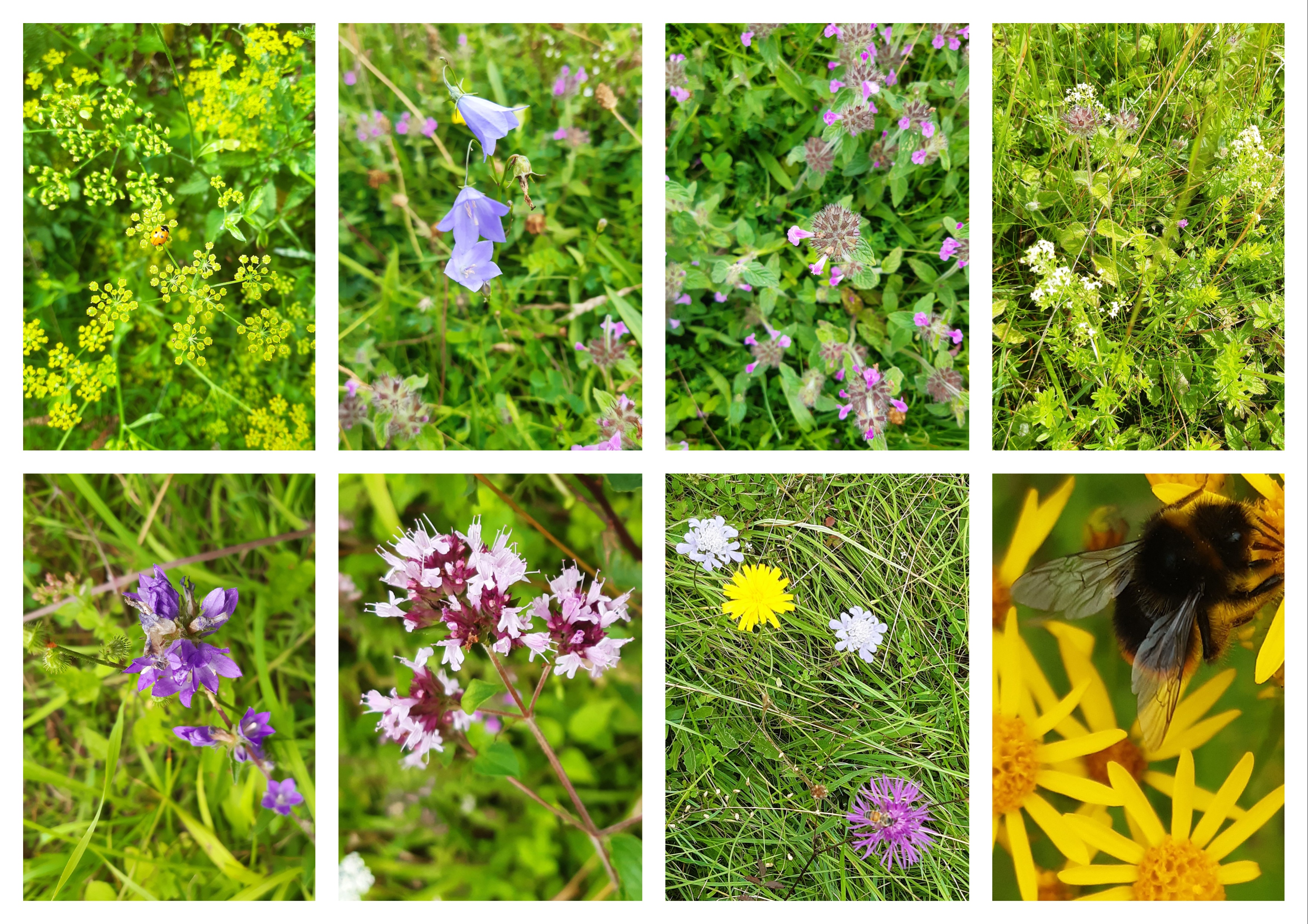
Here are just a few of the flowers I saw:


CLOCKWISE from top left: ladybird on wild parsnip; harebells; wild basil; hedge bedstraw; buff-tailed bumble bee on ragwort; scabious, hawkweed and knapweed with honey bee; oregano and clustered bellflower 


A clootie tree  in a circle of yews, which in the past were used as a natural memorial for the Esher family who once owned the land


Looking north-west to Watlington and the horizon

It was warm so I sat on a bench and watched the red kites that had been promised and duly materialised. It was so lovely to hear their strangely haunting whistling, for the first time since we went to the kite-feeding station at Bwlch Nant yr Arian last summer.


The return route around the top of the hill took me through some yew woodland ... 


... and along a pretty chalk track running parallel to a sunken and somewhat overgrown drovers' path.


Having dipped down, I laboured back up the hill, pausing and looking back every now and again, this time with views of the Vale of Oxford.


There were a couple more fairly close encounters with a red kite ...


... and two ceps which were far too elderly to be edible. 

I still had an hour and a half to spare before I picked Son the Elder up, so I drove to Iffley, which is quite near his roboteering venue, to wait it out, having realised after our visit to the church in May, that I hadn't paid enough attention to its ancient yew tree, which is believed to be at least 1600 years old and stands near its south-east corner. 


The oldest tree in Oxfordshire


Holly tree

Back in Botley, I picked up a deeply satisfied Son the Elder, whose robots had won a side competition and come second in the main event. An all-round good day.