
The last few days have brought the opportunity to walk at Ashton Court and Ashton Hill, which has been a real treat. First, Ashton Court early on Sunday morning.


'Freedom of Speech' by Hugo Farmer
I've never been inside the Mansion. It's owned by Bristol City Council, and many of the rooms are in a derelict condition. In common with the other mansions built of golden stone dotted around Bristol, it has an ugly connection with the slave trade, two young women from slaving families having married, in 1692 and 1757 respectively, into the Smyth family who owned the mansion, with both bringing some of that wealth with them in the form of dowries.

damage from Storm Darragh

It was a hazy morning, but fine and quite warm. We headed for nearby Church Wood, where bluebell shoots are forcing their way through the remaining leaf litter ...


... which is what you would expect this time of year. I was a bit surprised to see this red campion, though - it's very early.


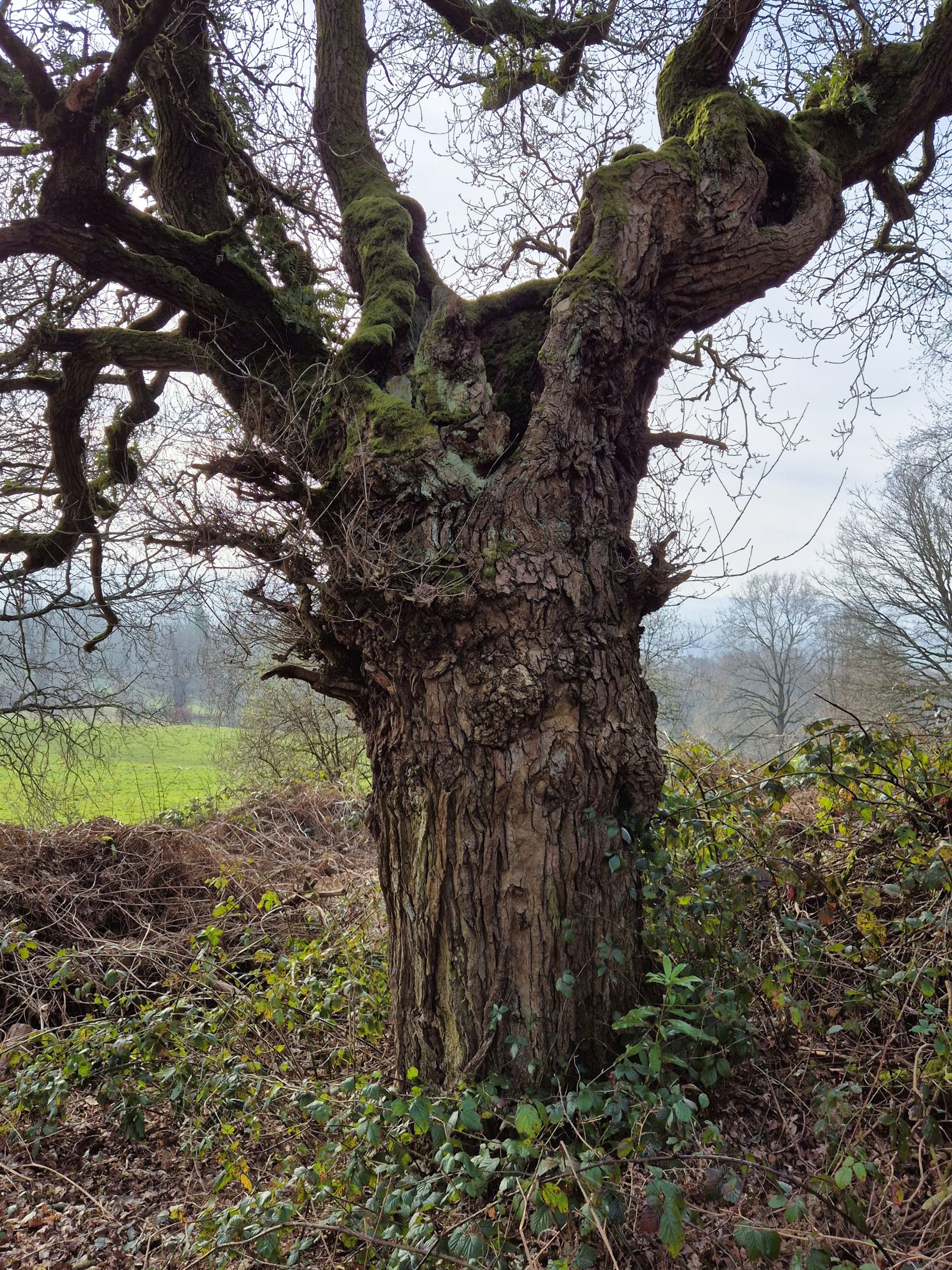

I was fascinated by the ancient trees, some still living and some dead, though no less magnificent for that.


We sat on a fallen tree for a while and watched the ravens nesting in the Scots pines.

This tree clearly fell a long time ago, but bluebells still sprout between its roots.


Back at the mansion, there was a misty view of the Victorian terraces of Clifton Wood and Cabot Tower ...

... plus this tower of avocado on toast for breakfast in the cafe, which proved more than I could eat ...

... but was definitely not something a Cwtch could safely polish off.
A few days later Cwtch and I were back in the same area, this time at Ashton Hill, which used to be part of the Tyntesfield estate, where we met some of my school friends for a get-together.

I hadn't walked here before, but I had driven around the nearby roads with Son the Actor at silly o'clock in the morning, a fair few years ago now, when we were trying to find the drop-off point for the filming of a scene from Poldark in which he'd been cast as an extra. (For some reason the little neon cards they use to indicate a filming location failed in their purpose, as we weren't the only ones lost.) We found it in the end, and I'd always intended to return for a walk, but had never got around to it till now.
The scene in question was the opening scene of the first episode in the first season, when our hero is in Virginia, having been dragooned into the British army and sent to fight in the American War of Independence in a deal struck to avoid execution for smuggling. This location was chosen to represent America on account of its stand of redwood trees, despite the fact sequoia are native to California.


Studying the information board


It's hard to look around you properly and socialise - at least, I find it difficult to walk and talk and pay attention to my surroundings at the same time - so I'm going to have to go back again for a proper wander about. Nevertheless, I did spot some nice views through the bare branches, and some impressive old trees.
.


And of course, even though they are a bit distracting, you can't beat the company of old friends, two of whom I've known since primary school, and one since nursery. (The other two are of much later acquaintance, dating only from secondary school - in fact, I barely know them.)


