About Me

My photo
Bristol , United Kingdom
Poet and poetry facilitator. Neurodishevelled. My sixth poetry collection, Love the Albatross, is available from Indigo Dreams or directly from me.
Showing posts with label Norman Conquest. Show all posts

Monday, 29 July 2024

The shifting pebbles of Pevensey

 A flying trip to Sussex yesterday for a pub lunch with my daughter and her partner, after which we wandered along the pebble beach at Pevensey Bay, where the future William I landed his invasion force on 28th September 1066. These days it's far more peaceful. 


Looking over towards Bexhill


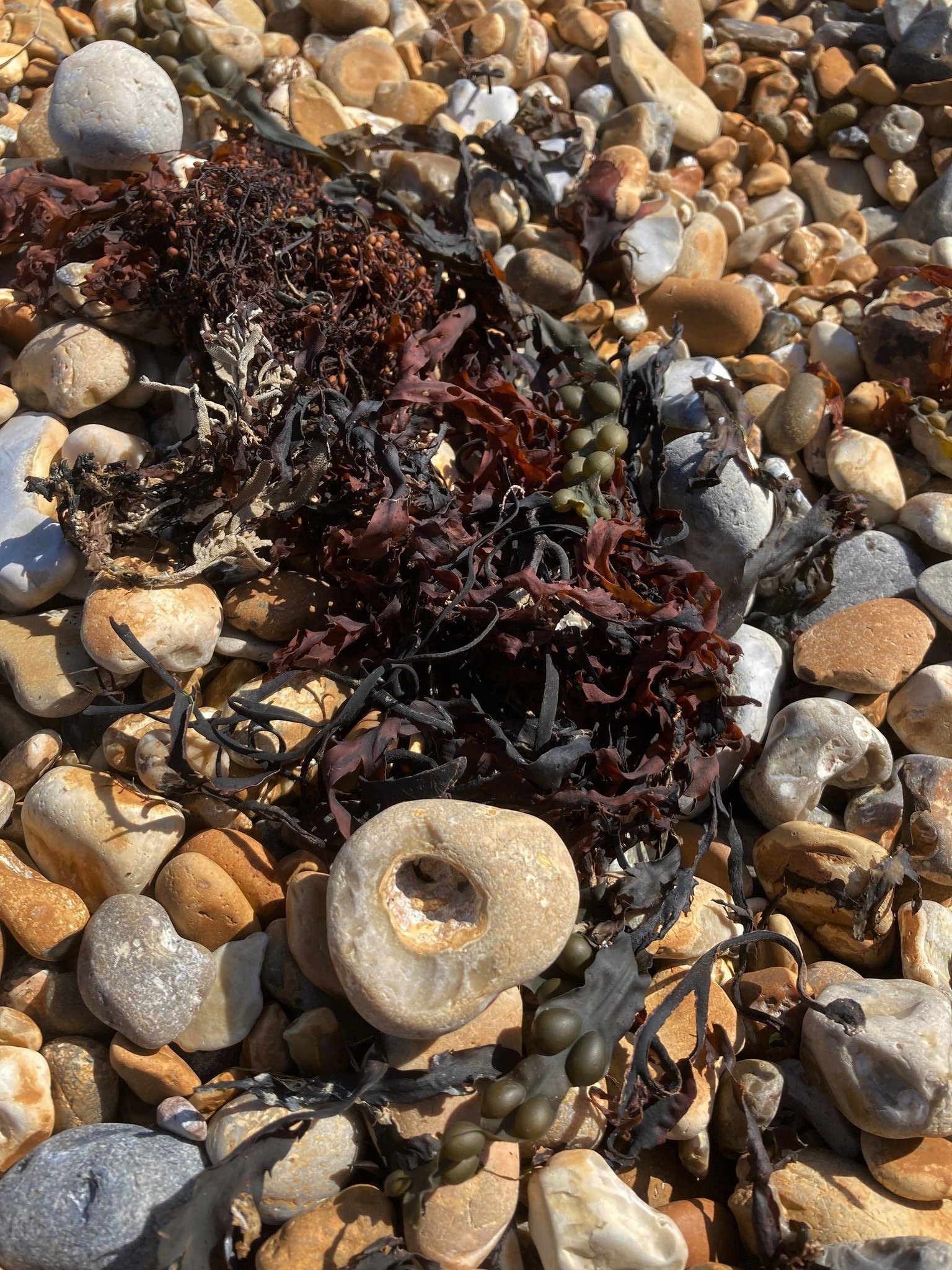
We sat for a while and relaxed, before admiring the 'gardens' at the top of the shingle bank on the way back to the car. They looked more like they'd grown themselves, and were no less beautiful for that. 


I think I should thread my hagstones and hang them somewhere too, even though we're a few miles further from the sea here. Maybe I'll find somewhere when the extension I'm having built is complete.


There was just one thing missing. I knew there was a castle at Pevensey but for some reason, I'd been convinced it's on the coast, but it isn't. But I've seen it! I wailed, inwardly. In a picture, on a crag - with turrets - overlooking the sea ... 

I stopped, followed my subconscious train of thought - Pevensey
 
à Pevensie à  Peter, Susan, Edmund, Lucy  à Narnia ... oh! I was thinking of Cair Paravel.  

The non-fictional Pevensey Castle is situated about a mile inland, between the villages of Pevensey and Westham. Alex kindly detoured so that we could see it from the outside. It's massive and impressive and I think I'll properly plan a visit there sometime. And ... 

... at the time of the Norman invasion, in 1066, the land it was built on was a peninsula projecting from the coast. It had first been fortified by the Romans; then, after the invasion, William had temporary defences raised, which were later replaced by the great mediaeval castle. So the picture in my head wasn't wrong; it was just 960 years out of date.


Sunday, 12 June 2022

Headstrong in Lewes

It was a Lucky Thirteen Red Kite Day yesterday (plus a buzzard and a kestrel) for my trip, along with Son the Elder, east and south to Sussex to visit my daughter. The fourteenth red kite was dead in the fast lane of the M4 and clearly wasn't lucky, so I didn't count it. (Sometimes you have to be selective when it comes to good omens.)

Our destination, having collected Jenny from her abode, was Lewes, though when I saw the gorgeous turquoise colour of the sea, I thought maybe we were mad to head inland. That said, I was pleasantly surprised from our arrival onwards, because after all, who doesn't like a 15th century bookshop ... 


... and a house with the legend Writer and Revolutionary emblazoned on it?


In fact, Thomas Paine, who lived in Lewes from 1768 to 1774 and was radicalised there as a member of the Headstrong Club, was commemorated pretty much all over the place.


The White Hart Inn


The Tom Paine Printing Press and Gallery


The pub 'The Rights of Man' looked particularly inviting - it had my name written all over it - but it was hosting what looked like a wedding, so we didn't get to have lunch there. Which was a double shame, as my paternal grandmother's maiden name was Pain, spelt the way Thomas Paine's name was originally, which meant - surely? - that my claim to a seat and a complimentary pint of Tom Paine from Harvey's brewery was strong.  


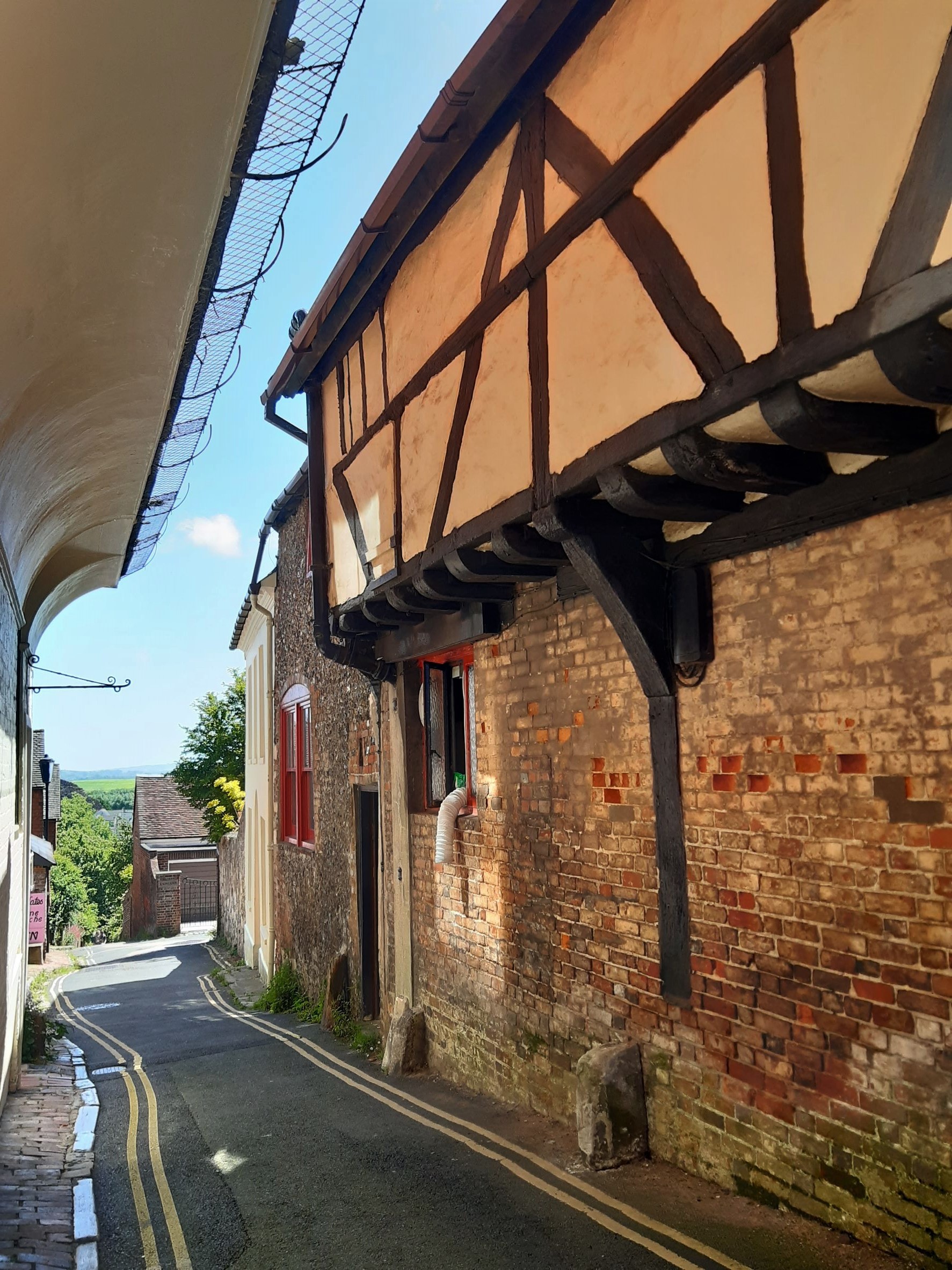
After lunch in an Italian restaurant instead, we had a little wander down the High Street. I especially liked the way the narrow side streets - or twittens - drop downhill, giving views of the hills that surround the town. It reminded me of Ludlow a bit in this respect ... 


... and also with regard to its nooks and interesting old buildings ...


... one of which - Stewards Inn - is believed to date from at least 1330.


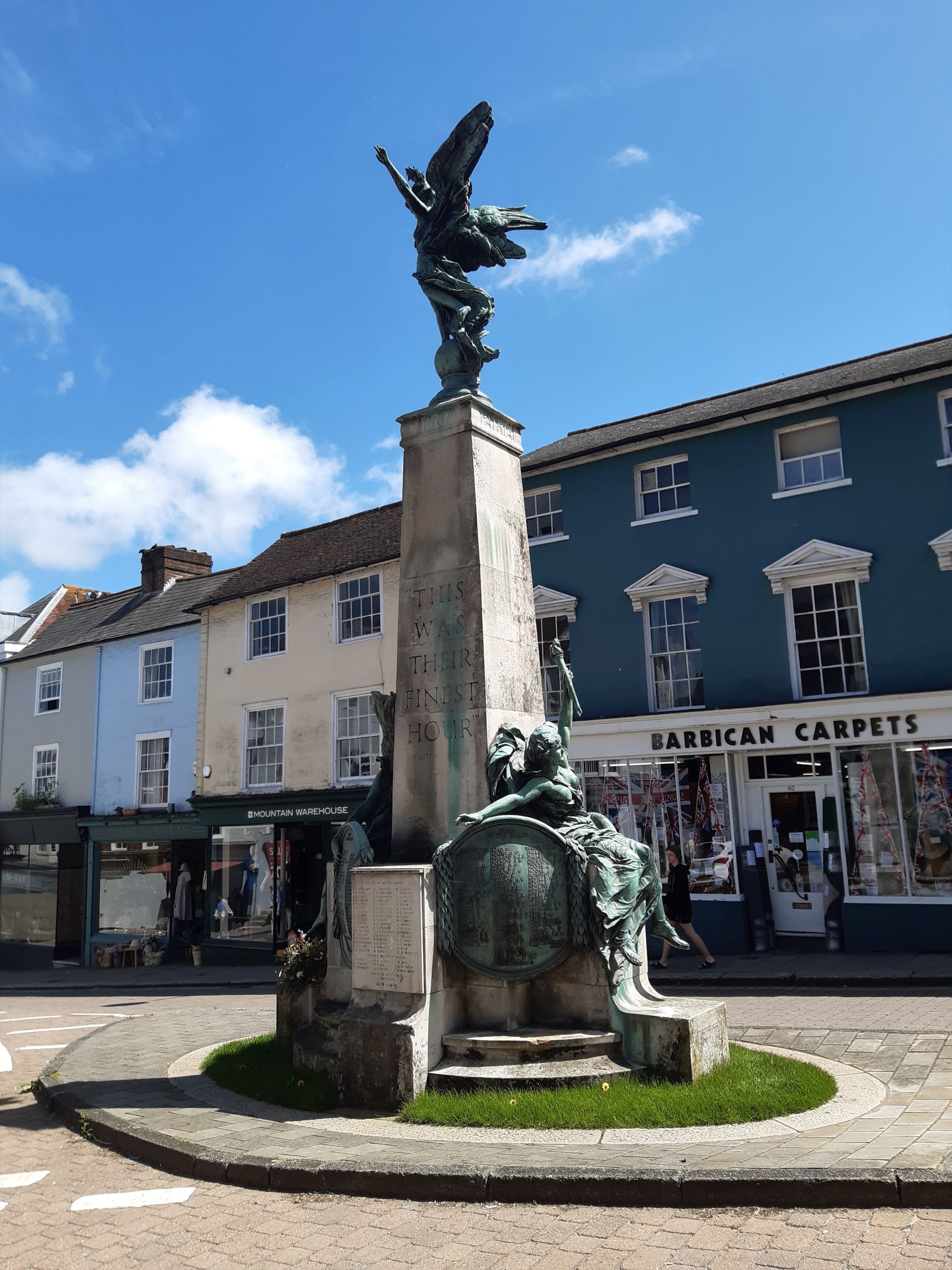
War memorial

I was beginning to conclude that Lewes isn't quite the picturesque, entrenched Tory town I'd rather lazily imagined it was, and having read up a bit since, it seems that in Paine's time it had a reputation for being a hotbed of radicalism and anti-monarchist sentiment. (A friend has subsequently assured me that the current Tory MP is a blip.)   


The town hall with its rainbow flag, which was previously the site of the Star Inn, in front of which the execution by burning of the town's seventeen Marian martyrs took place

We then headed for the Castle, visiting the museum first and then the Castle itself, which dates from just after the Norman Conquest and is splendid. 


Part of the Norman gatehouse to the left; the Barbican to the right


A cannon from the Crimean War

I was keen to test William Morris's famous assertion about the town, namely:

'You can see Lewes lying like a box of toys under a great amphitheatre of chalk hills ... on the whole it is set down better than any town I have seen in England' 

and so headed straight up the steps to the Keep, taking advantage of strategically placed benches on the way. (Well, it was hot.) 

The views were impressive, although of course Lewes would have been a lot more compact in 1882, when Morris visited with his daughter Jenny. 


Back down at ground level, we crossed to the Barbican, which also has great views.


Half a mile or so away is chalk face of Cliffe Hill, the implausible site of the deadliest ever avalanche to occur on these islands, when, in 1832, a build-up of snow collapsed onto the town 330 feet below, killing eight people. Hard to imagine it on such a warm summer day.


By now my offspring were hot and thirsty, so to avoid the onset of recalcitrance, we drove back to the coast. Although you don't see it quoted by the local tourist board, Morris finished his observation by saying that Lewes 'is not a very interesting town in itself'. I disagree, and found myself compiling a list of all the other places there I'd like to visit and rueing the fact that every day-trip I make to Sussex is bookended by a three-hour drive.

Back by the sea, it was still hot but breezy and gulls were having fun riding the updraughts. We bought ice cream and drinks, and sat ourselves down on the beach for an hour or so before the long drive back to Bristol.


It was too late for any kite-sightings on the way back down the M4, Ma and Pa Kite being tucked up with their soon-to-be-fledglings by then. We did see a few white kites near Gatwick and Heathrow, though - Son the Elder's joke - and a kestrel to match the one from our outward journey, hovering over one of the many instances of roadkill littering the hard shoulder. A good day for us, though, at least. 

Saturday, 5 February 2022

A truncated tour of Chepstow Castle

Son the Younger's car was due for an MOT and service in Newport, and since the weather forecast was good and since he's moving Up North (to Coventry) soon, I decided to make the most of him, and spare him the misery of hours spent waiting in Dunelm for it to be ready.  

On previous such occasions we've been to Porthcawl and Merthyr Mawr, Llandaff Cathedral and the Welsh Folk Museum at St Fagan's, and Kenfig Burrows. This time we headed east to Chepstow ... 


... and its monstrous castle which, I'm ashamed to say, I've never been inside in all my 60 years, despite having lived within 12 miles of it ever since the opening of the old Severn Bridge in 1966. 

I say monstrous because it really is - a colossal weapon of mass oppression, the building of which was started in 1067 by Baron William FitzOsbern, a Norman warlord. This makes it the earliest stone castle in Wales; yea, verily, the oldest surviving post-Roman stone fortification in Britain. Look at these buttresses:


Marten's Tower, c1270 - 1306 (but named for regicide Henry Marten, who was imprisoned there from 1668 to 1680) 


The gatehouse, c1189 - 1219

And the original castle doors, which have been dendrochronologically tested, date from at least the 1190s, and are the oldest castle doors in Europe.


They look like they could do with a lick of creosote, though.

The castle is built atop limestone cliffs that form a ridge of land between the River Wye and a small valley known locally as the Dell. 


In the cellars of the Lower Bailey you can see where provisions would have been winched up from boats moored below the castle walls.


The cellar steps


Doorway into the Middle Bailey

Unfortunately - given that it had taken me so long to visit - the Great Tower, which is the oldest part of the building, the Gallery, the Upper Bailey and the Upper Barbican are all currently out of bounds, owing to conservation work. Although the people we saw wandering around at that end of the Castle looked more like speleologists than conservationists. 


The Great Tower is the oldest section of the Castle, the part Baron William FitzOsbern built, incorporating some already worked blocks of stone from the Roman ruins at nearby Caerwent.  We did get to see the typically Norman chip-carving on the tympanum, though, and an overhead gull ...


... which made a change from all the feral pigeons copulating in various crannies.


Another ancient door leads into Marten's Tower ...


... where's there's quite a lot of old graffiti on the walls.


Inside Marten's Tower


The romantic Chapel window, with nature imitating art

Views from the top of Marten's Tower included:


Across the Lower Bailey to the Wye


The Priory Church of St Mary and the old Severn Bridge


The 1816 Chepstow Bridge


Look, I'm the same height as a Norman warlord! (Or did they have to stoop?) 


After we'd done with the Castle, we made for The Cwtch cafe (where else?) for a little lunch and then headed to the Priory Church of St Mary, in the floor of which the aforementioned Henry Marten is buried. I'd run out of charge for my phone by then, but Son the Younger kindly took a photo of one of my favourite ever tombs, that of local benefactor Margaret Cleyton, who died in 1627, her two husbands, and twelve children (ten of them girls).  


It's the skeleton that fascinates me with its unfeasibly pristine teeth. (I do wonder how faithful was the restoration the tomb underwent in 1967.)

And then, after a ceremonial stand in the middle of the old Chepstow bridge, where Wales becomes England, it was back to Newport to drop Son the Younger off at the garage and home to Cwtch, who is now poised to learn how to ignore me in two languages.