About Me

My photo
Bristol , United Kingdom
Poet and poetry facilitator. Neurodishevelled. My sixth poetry collection, Love the Albatross, is available from Indigo Dreams or directly from me.

Friday, 1 July 2016

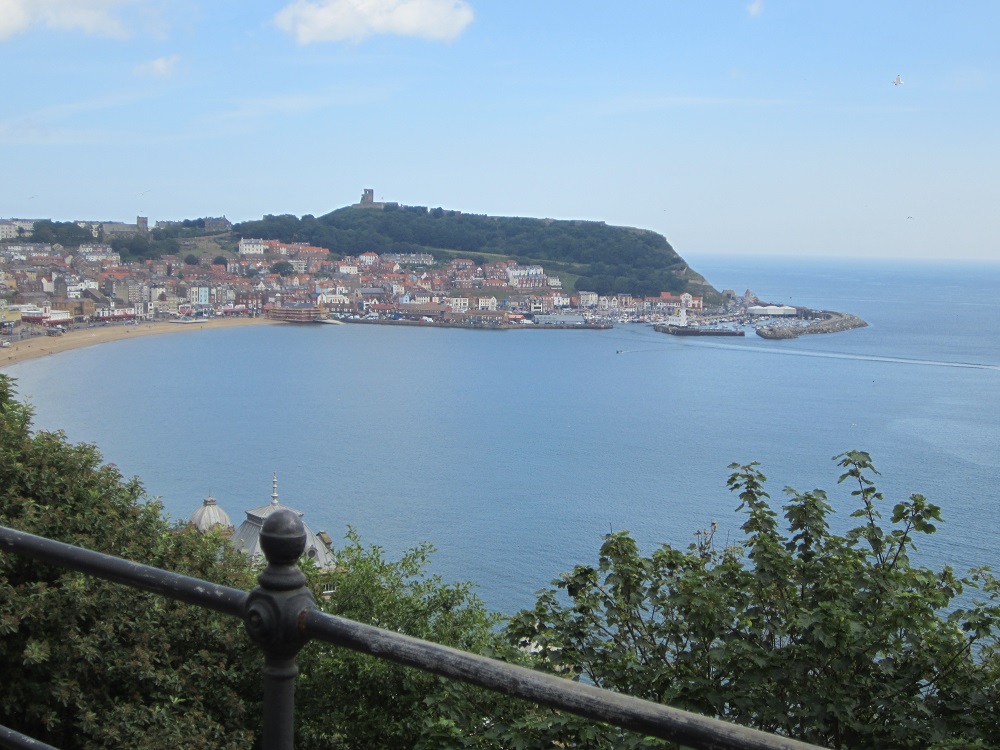
Heaven in Scarborough ... and then we went to Filey


I tried the door. St Martin-on-the-Hill was locked. But there was a sign alongside - guided tours at 10.30am every Tuesday. I looked at my phone. It was nearly 10am. I looked at my partner. Was it Tuesday? Yes, it was. 

While he took Ted dog off to sample the delights of Scarborough, I counted off the minutes until I could get in. The guide and his wife made me a cup of coffee when they arrived. I was about to enter heaven on earth.  

Almost immediately, I was struck by the similarity with All Saints Church in Selsley, near Stroud, so it was no surprise to learn that this church and that are sister churches, designed by the same architect, G F Bodley, and both fitted out by Morris & Co.  
Our guide took me and three other people who had arrived on a guided tour of the beautiful windows. I'm posting pictures of some my favourites but there are more. 


St Martin divides his cloak in two and gives half to a beggar ...


... then dreams that the beggar is Christ in Majesty, conqueror of sin and  death, holding up the cloak while angels wipe their noses on it kiss it.


The rose window in the west wall, with a central Annunciation designed by Burne Jones, and circling angels by him and William Morris 


The story of SS Dorothea and Theophilus (now demoted to non-official sainthood owing to Lack Of Evidence Of Their Existence), with the most beautiful angel/fruit bearer between them. Dorothea is modelled by Jane Morris.  Burne Jones was paid £12 for its design.


The Three Marys window, originally made for St Martin's Church in Brighton but rejected because it features Lizzie Siddal, a probable suicide 


Mary Magdalene, modelled by Annie Miller and designed by Morris


Mary the Virgin, modelled by Georgiana Burne Jones and designed by her husband


Mary of Bethany, modelled by Lizzie Siddal and designed by Morris


As well as these and other beautiful windows, there is a pulpit with panels on the front painted to designs by Ford Madox Brown and Morris. The top row shows the Four Evangelists; the bottom panels, depicting SS Augustine of Hippo, Gregory, Jerome and Ambrose of Milan, were considered close to popery by some of the townsfolk of Scarborough and had to be curtained when the pulpit was first installed, for fear of causing offence. 


To the side there are two panels featuring scenes from the Annunciation by Dante Gabriel Rossetti. 
The organ 


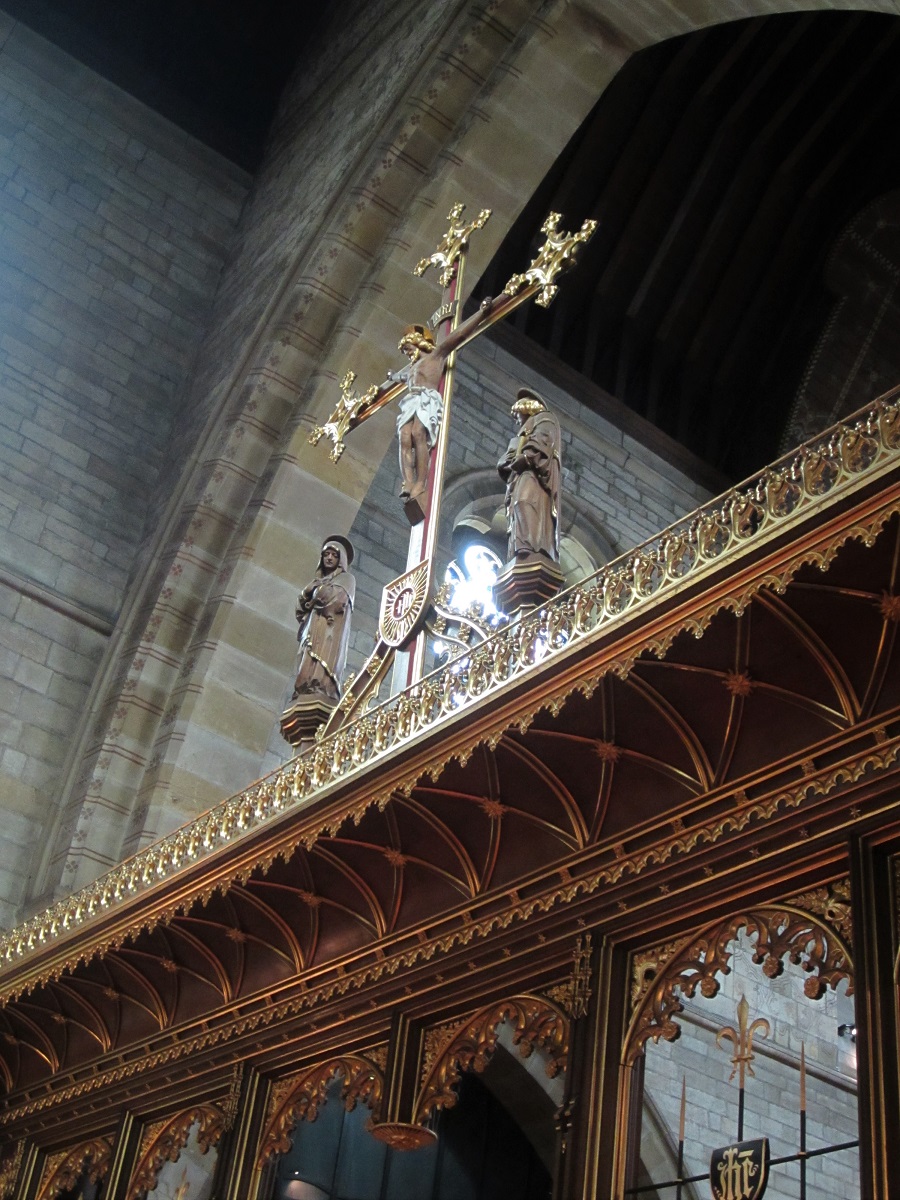
The rood screen and cross, both late additions after the death of the principle benefactor of the Church, Mary Craven, the crossing of which  symbolises death


The chancel, or heaven


The east window, telling the story of the Crucifixion through the Parable of the Vineyard


The beautiful beautiful ceiling of the Lady Chapel


Tearing myself away, I met up with the Northerner, who was rather underwhelmed by the secular delights of Scarborough, and we headed off to Filey, his childhood holiday destination. I'd been enthusing about how much I'd liked it during my stay a couple of years ago, when I went to my nephew's wedding, but I hadn't had my dog with me then and now much of the beach was out of bounds to us - or under water. 


And it was really hard to find anywhere decent to eat. And a gull managed to shit on both of us with one well-aimed evacuation. 

'Never mind,' said the woman in Boots when we went in for baby wipes. 'At least it wasn't one of those horrible gulls from Bridlington.' 

Yes, even non local gulls are to be denigrated in post-Brexit Britain. 


'We must remember to buy a lottery ticket' said the Northerner as he dabbed off a second direct hit - but needless to say, we forgot. 


Still at least one of our party was having a great time ... 


Wednesday, 29 June 2016

Cædmon and Dracula at St Mary's Church, Whitby

'It is one of the churches one is fondest of in the whole of England,' declared Pevsner.  

'Now perhaps the most depraved sacred building in the kingdom,' said Rev W Keane. 


I think it's fascinating. All those pews - so many they blocked the view of the chancel for most of the congregation, hence Keane's comment. 


I wonder what went on in those pews, out of sight (for the most part) of all but those within.


Graffiti ... 


... doodling ... 


... and a whole lot of other stuff, I bet.

There's no artificial lighting in the church ... 


... apart from that provided by candles ...  


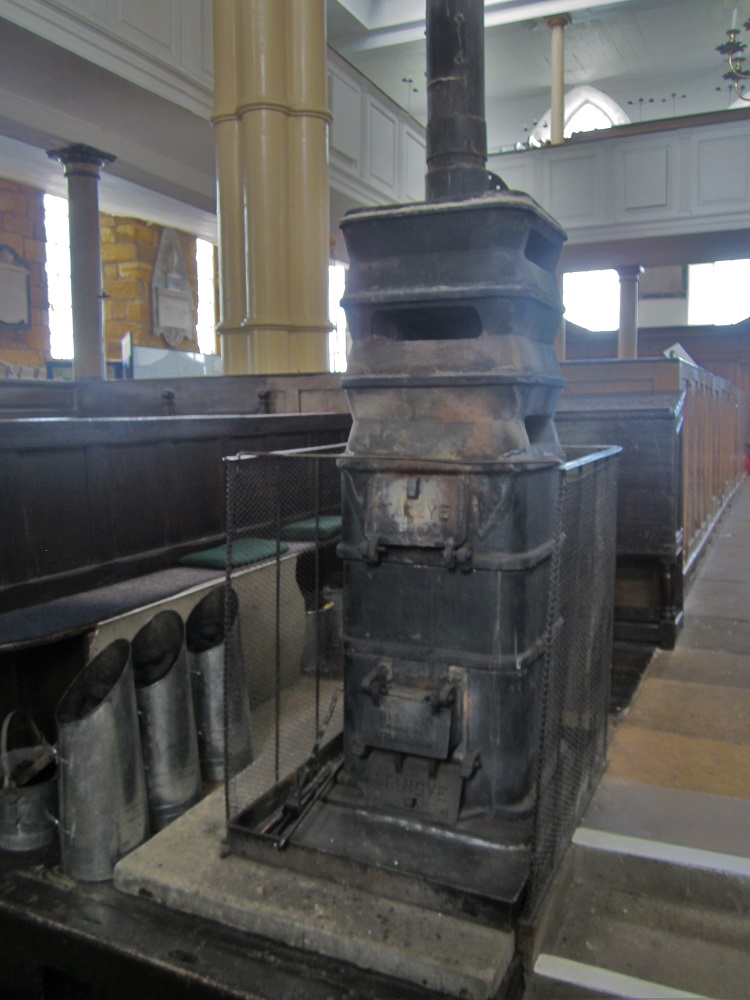
... and this stove is the only source of heat.  You'd be forgiven, surely, for cuddling up a bit to keep warm. 


Ancient - 15th century? - stone font, found in a field serving as trough


Ancient - 15th century? - iron-bound parish chest


The triple-decker pulpit


Anglo-Saxon coffin for a baby


A window honouring Cædmon, the earliest English poet whose name is known. An Anglo-Saxon, he cared for the animals during the abbacy of St Hild (1614-680). According to St Bede, he was ignorant of 'the art of song' but learnt to compose one night during a dream.  Only one of his poems has survived. 


Here's a cross set up in the churchyard in his honour in 1898.


And yes, that churchyard, famously falling into the sea and showering the ground below the cliff below with bones.


Some seriously weathered headstones here. 


I am not so sure I would like to go there at night:

'There was a bright full moon, with heavy black, driving clouds, which threw the whole scene into a fleeting diorama of light and shade as they sailed across. For a moment or two I could see nothing, as the shadow of a cloud obscured St. Mary's Church and all around it. Then as the cloud passed I could see the ruins of the abbey coming into view, and as the edge of a narrow band of light as sharp as a sword-cut moved along, the church and churchyard became gradually visible. Whatever my expectation was, it was not disappointed, for there, on our favourite seat, the silver light of the moon struck a half-reclining figure, snowy white. The coming of the cloud was too quick for me to see much, for shadow shut down on light almost immediately, but it seemed to me as though something dark stood behind the seat where the white figure shone, and bent over it. What it was, whether man or beast, I could not tell.'
from 'Dracula' by Bram Stoker


Friday, 24 June 2016

Lulworth Cove and Durdle Door - Snatching Defeat from the Jaws of Victory

My father announced some years ago now that he would like to visit Lulworth Cove and Durdle Door in Dorset, a desire he's often repeated since.  I've lost count of the number of times I've offered to drive him there but he's always had a reason not to go - too cold, too wet, too hot, too pretty much anything really.  To which he'd add, 'There's plenty of time'.


I began to think that I would never get him there, and that when I did eventually visit myself, maybe after his death, I would be consumed with guilt at my failure, even though I'd know I'd tried my hardest.  Three years ago, I even wrote a poem about not taking him to Lulworth Cove.

When my sister announced that she and her husband would be taking the parents on holiday to Dorset, I heaved a sigh of relief. Far easier to herd them there from a distance of six miles. And I could go down too, and spend the day with them.

So as soon as I'd cast my vote in the EU referendum, I set off. It was a good day for a jaunt, beautiful in a grey sort of way, as this country so often is. And despite worries about which way the vote would go, I was glad I was finally going to cross Lulworth Cove off the List of Places To Take My Parents.

Except that they are 94 and 88 now, and their mobility is poor.  The Cove proved too far for them to walk to from the pub by the car park. There was no vehicular access, not even to drop them off.  And the wheelchair I bought when I broke my leg, in the hope they too would get some use out of it, was 100 miles away, right at the back of their cupboard under the stairs, rejected.


So it was just me, my sister, my brother-in-law and their large and exuberant puppy who saw this.


We wondered if there was a way of seeing the shore from the cliffs. There'd be panoramic viewpoints, right? My sister went into the Tourist Information Centre. Nope, no way of seeing the Cove or Durdle Door from the cliffs without trekking quite a way. 'How are they at walking over grass?'


We drove up there anyway.  Rooks watched carefully to see how we were going to resolve this.  We made preliminary forays along various paths to see if they were worth a try. They weren't.


In the end only my brother-in-law, the dog and I made it down to the beach to get a proper look.


And it was beautiful ...


... Durdle Door to the left, Durdle Cat Flap to the right, with waves like perfectly scalloped lace. 
Leaving my sister pondering the possibility of hiring a wheelchair and returning the next day, I bade the merry band of holidaymakers farewell and headed for home. On the way I stopped off at Bere Regis and had a look around the stone and flint Church of St John the Baptist.  


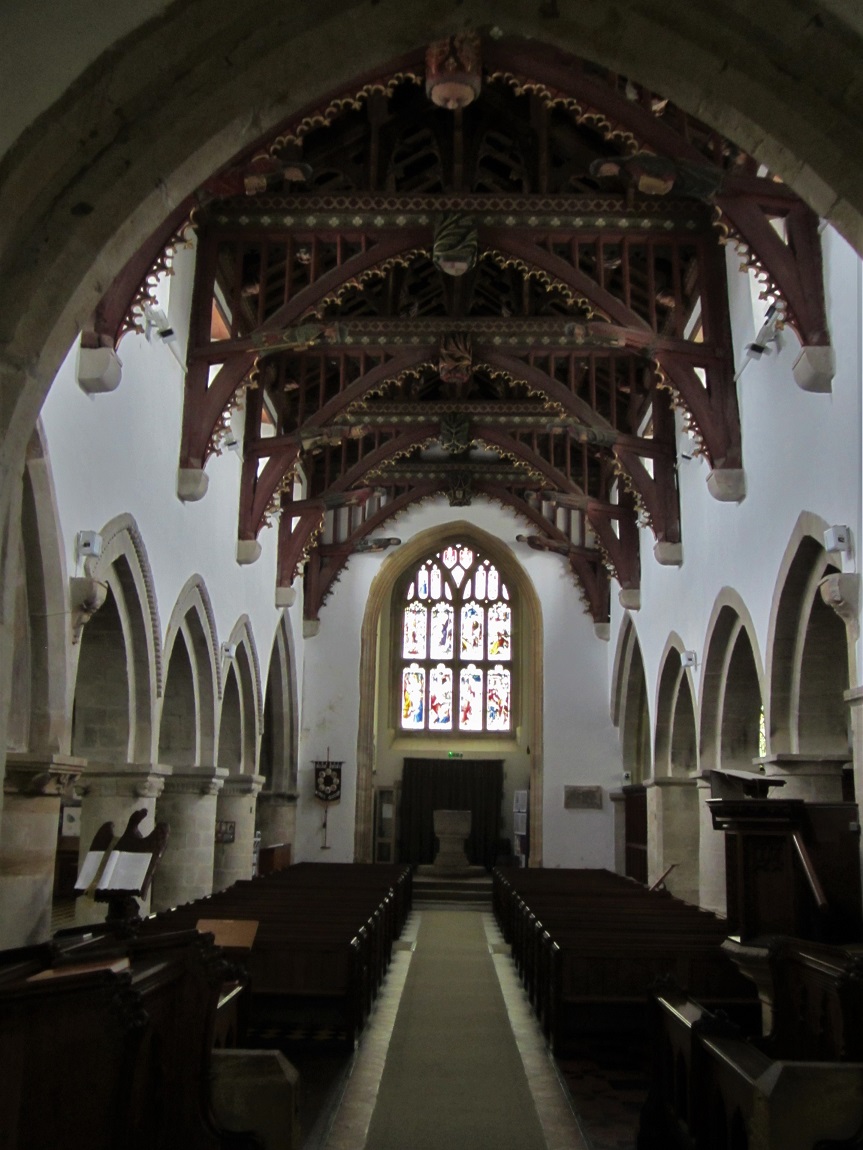
There are some churches you go inside, look up and marvel - Muchelney is one, as are Martock, Long Sutton, and the Church of St Thomas and Edmund in Salisbury - and now there's another to add to the list.

Constructed in about 1485, the carved figures on the nave roof are believed to depict the twelve apostles. There are also huge bosses and carved heads on the wall plates between the trusses.


Meanwhile in the chancel there are angels.
The stone altar was discovered buried under the chancel floor in the 19th century, having been put there at the time of the Reformation to avoid destruction.  It's now hidden away under embroidered drapery.


I loved the 12th century carvings on the pillars of south side of the church, especially the ones of man with headache and man with toothache.  


They reminded me of the sheela-na-gig at the Church of St Mary and St David, Kilpeck in Herefordshire, which was built around 1140. 


Time was getting on. Tempting as it was to visit Shitterton, Piddlehinton and Piddletrenthide, I decided they must wait for another day, and it was as well, as an accident outside Dyrham Park meant that it took me over an hour to travel the last five miles up to the Bath junction of the M5. 

Sitting in my car looking over verges of long golden grass and poppies to a sky with clouds layered like the side of a Walls Viennetta which someone took from the packaging too hastily and smudged with their thumbs, I thought how beautiful this island is and how much I love it, and I hoped so hard that its people would not vote to turn their backs on our neighbours and close borders and minds. 

Meanwhile three men in the car in front tipped their rubbish out through the window. 


The AA New Book of the Road


He has abandoned
his forties atlas of the world,
the one that takes him back

to Castel Benito, Tripolitania, the capital
city of old Brindisi,
Palestine.

Instead he’s tracking the A37,
planning advances on
Lulworth Cove and Durdle Door, 

the skin on his finger paper thin,
the back of his hand a Spaghetti junction
of knotted highways.

Let’s go tomorrow
I say quickly. No rain forecast.
Some sunshine. 

We’ll wait till it’s warmer
he decides.  No need to rush.
There’s plenty of time.

© Deborah Harvey 2014 

Friday, 17 June 2016

Nature's Apotropaios

Apotropaios is one of my favourite things.  From concealed shoes and the outlines of shoes carved into stonework to witch bottles, magic circles and Patrick Troughton's character in The Omen papering the walls and windows of his room with pages from the Bible, I find the whole subject compelling, and I always get a thrill when I spot examples in and around my small patch, and sometimes further afield


Examples of apotropaic circles can be seen in the doorway of the Tithe Barn at Bradford-on-Avon. These are known as Hexafoils or Daisy Wheels, and are believed to be both protection against evil and good luck symbols.  

There's some information about them here.   


When my life felt a lot less secure than it does now, I found myself unconsciously employing similar practices. I don't need to do any of that now but nevertheless, having stripped off the blown vinyl wallpaper from a historically damp bedroom wall in my new (old) house, I was pleased to find this pattern had somehow imprinted itself from the wallpaper into the cloudscape of mould, in a way that is far more beautiful than what was originally on the wall.  Of course, the wall will be sealed and painted over eventually, but the pattern of nature's daisy wheels will always be there, hidden away.  


Charm


Even before their children were born
she’d pull hair from her head to knit into every
cardigan she made to keep them safe

While they played on the sand she’d draw
circles and signs, then cover them over
so nobody else would know they were there

Or gather holed stones to thread onto cords,
hang them from bedsteads in windows by doors
to keep danger at bay
                                           afraid of an absence
she couldn’t name, that stalked through dreams
she failed to remember, kept her on edge

deaf to the twist of its key in the lock,
the creak of the bed, the familiar
breath on the back of her neck

© Deborah Harvey 2016 


'Charm' is from my latest poetry collection, Breadcrumbs, published by Indigo Dreams Publishing, and is available from them, or Amazon, or all good bookshops.