About Me

My photo
Bristol , United Kingdom
Poet and poetry facilitator. Neurodishevelled. My sixth poetry collection, Love the Albatross, is available from Indigo Dreams or directly from me.

Sunday, 17 April 2022

Forever Imber

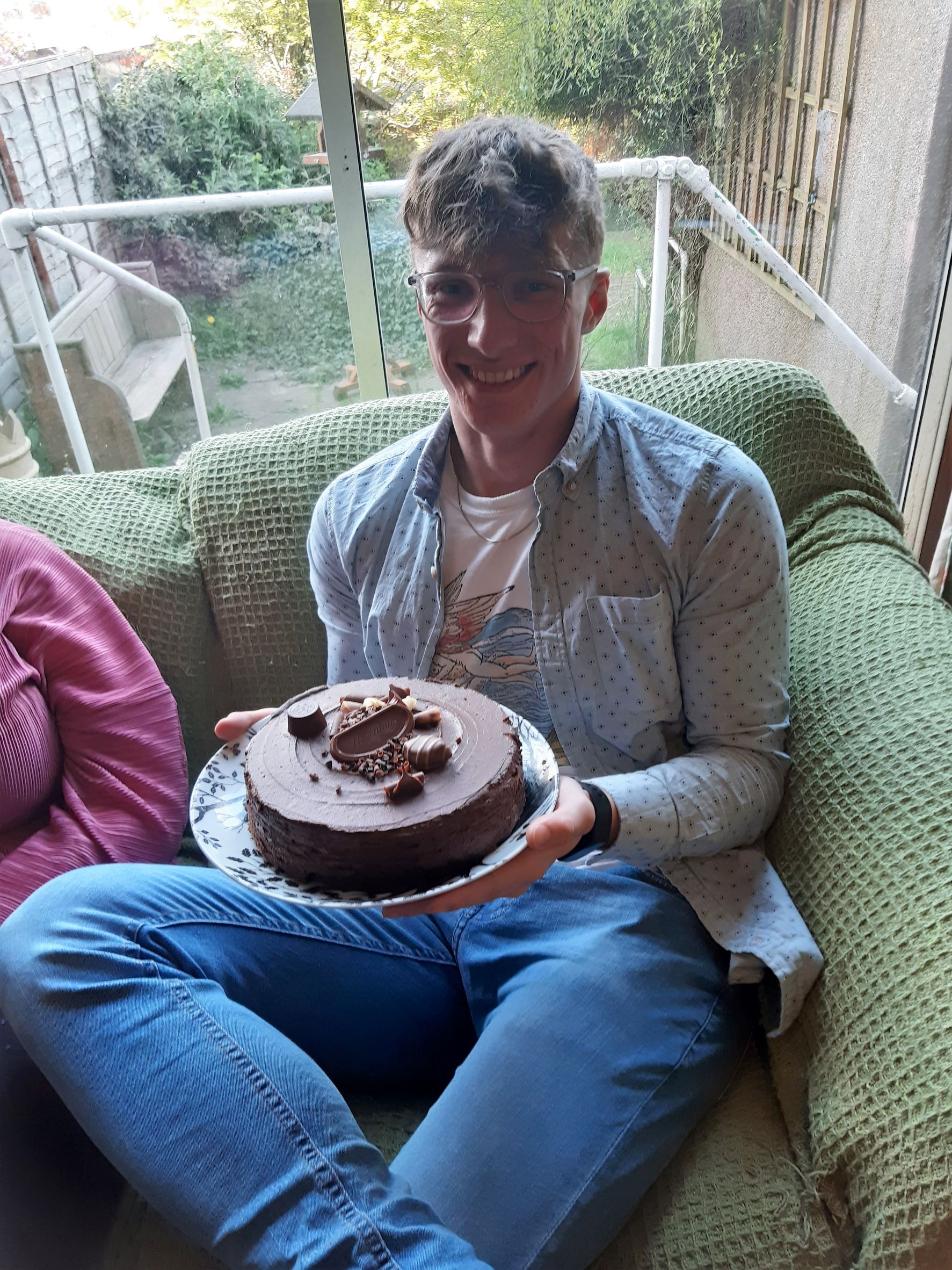
Yesterday was Son the Younger's birthday and we finally got to visit a place that had eluded us for years, which was exciting. First stop, though, the Boot Inn in Berwick St James, seven miles north-west of Salisbury for lunch. 

Because my daughter Jenny and her partner Alex had been held up in traffic near Woking, the rest of us had half an hour to spare so I nipped along the road to St James Church, an ancient flint and limestone building near a chalkstream, all of which speaks far more of the South of England than the West Country.


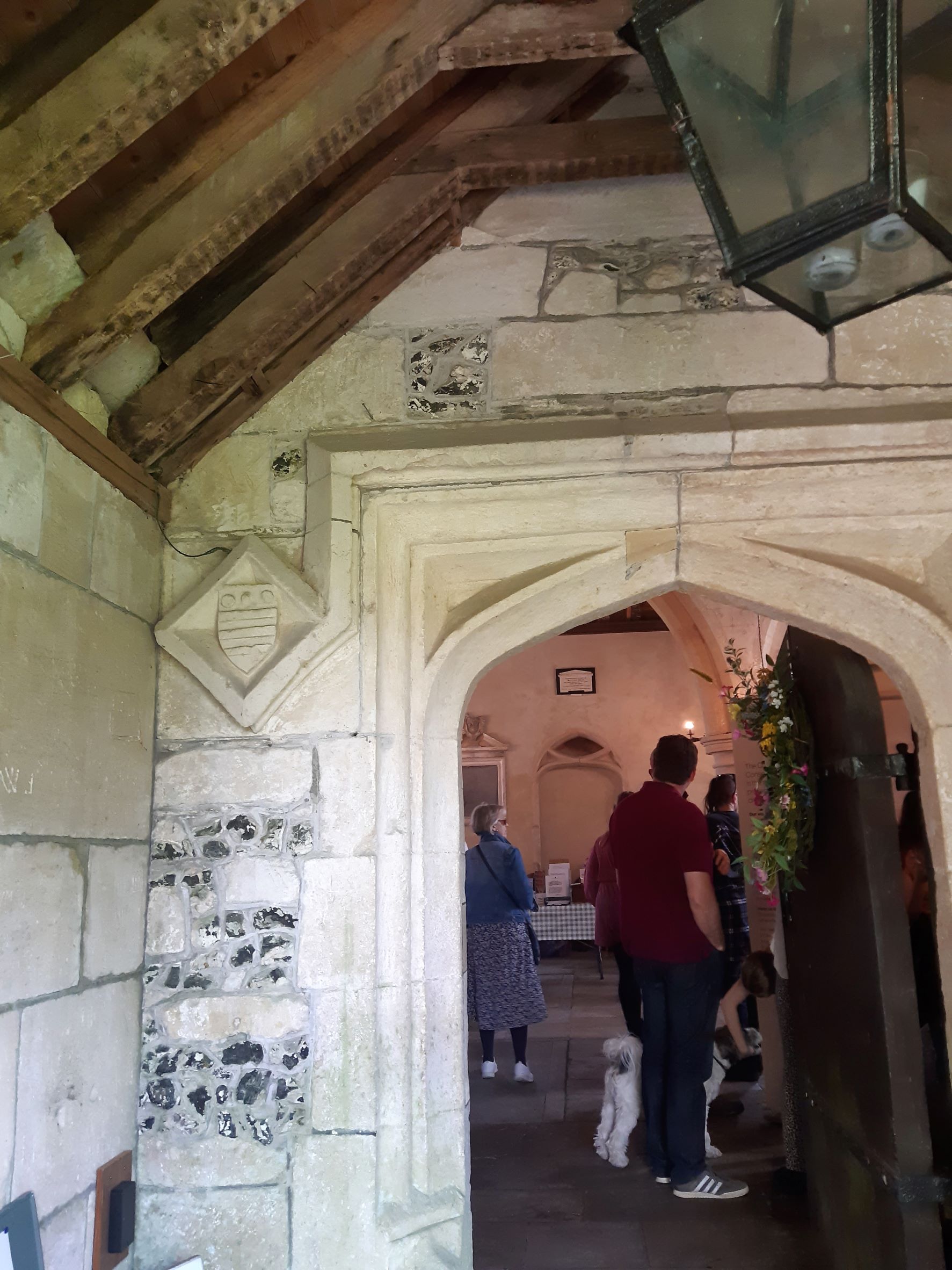
I've visited a few country churches during the pandemic but not so many that it doesn't feel like a novelty. This one has a 12th century Norman doorway ...  


... a 12th century font ... 


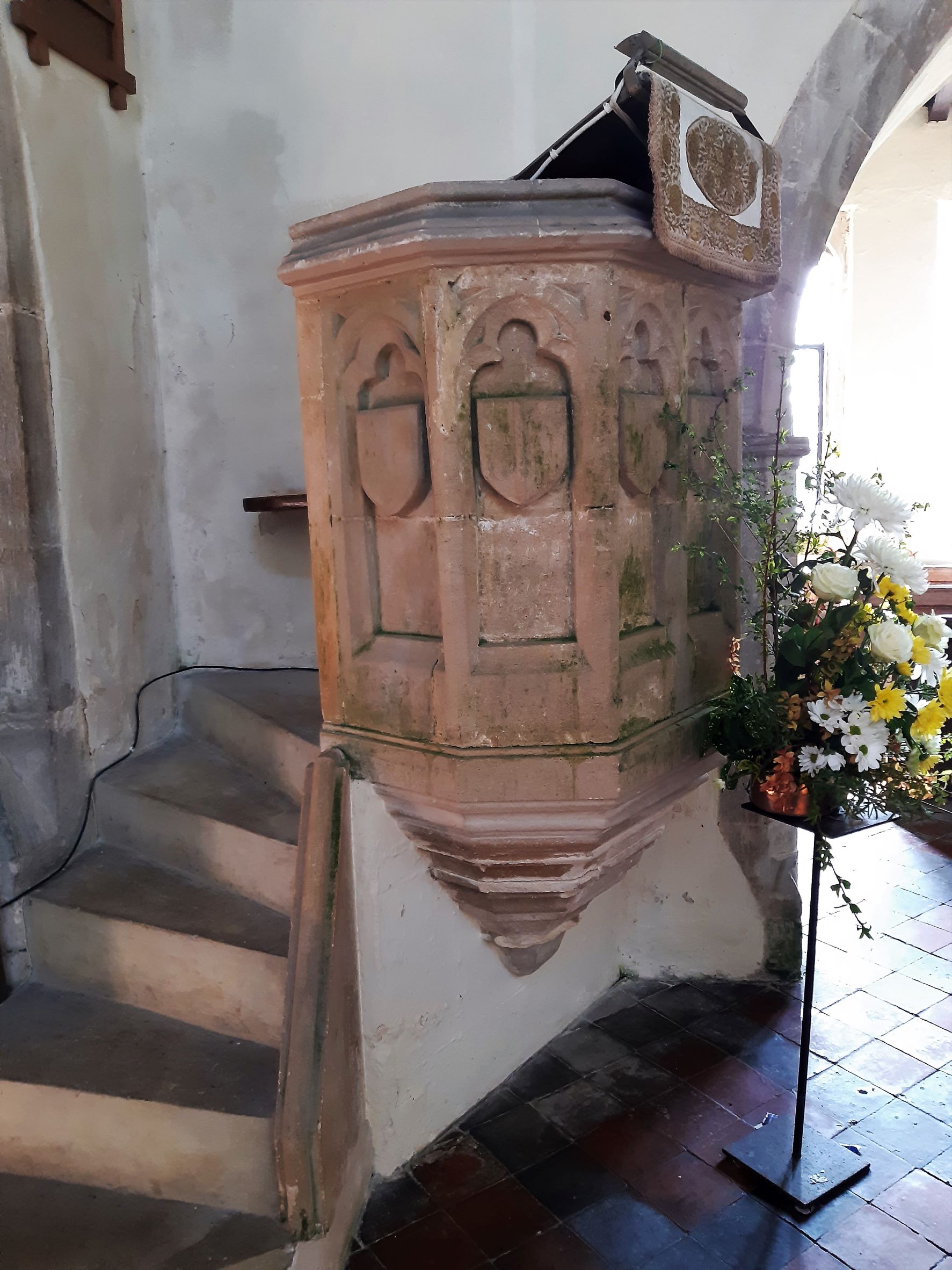
... and a 15th century stone pulpit, a rare survival from before the Reformation.


The Ukrainian flag


Graffiti 


Standing stones believed to have been removed from Stonehenge in the 17th century, where they functioned as an altar stone, to be used to build a bridge

After lunch we drove on to our destination, the remote 'ghost' village of Imber. 


The village gets a mention in the Domesday Book, and in fact dates back to at least 967 AD, but in 1943, its population of 150 was evicted so that it could be used as an exercise area for American troops in readiness for the invasion of Europe. 


Few of the original buildings remain. Seagram's Farmhouse dates from 1880. Meanwhile, Nag's Head cottages occupy the site of one of the village pubs.   
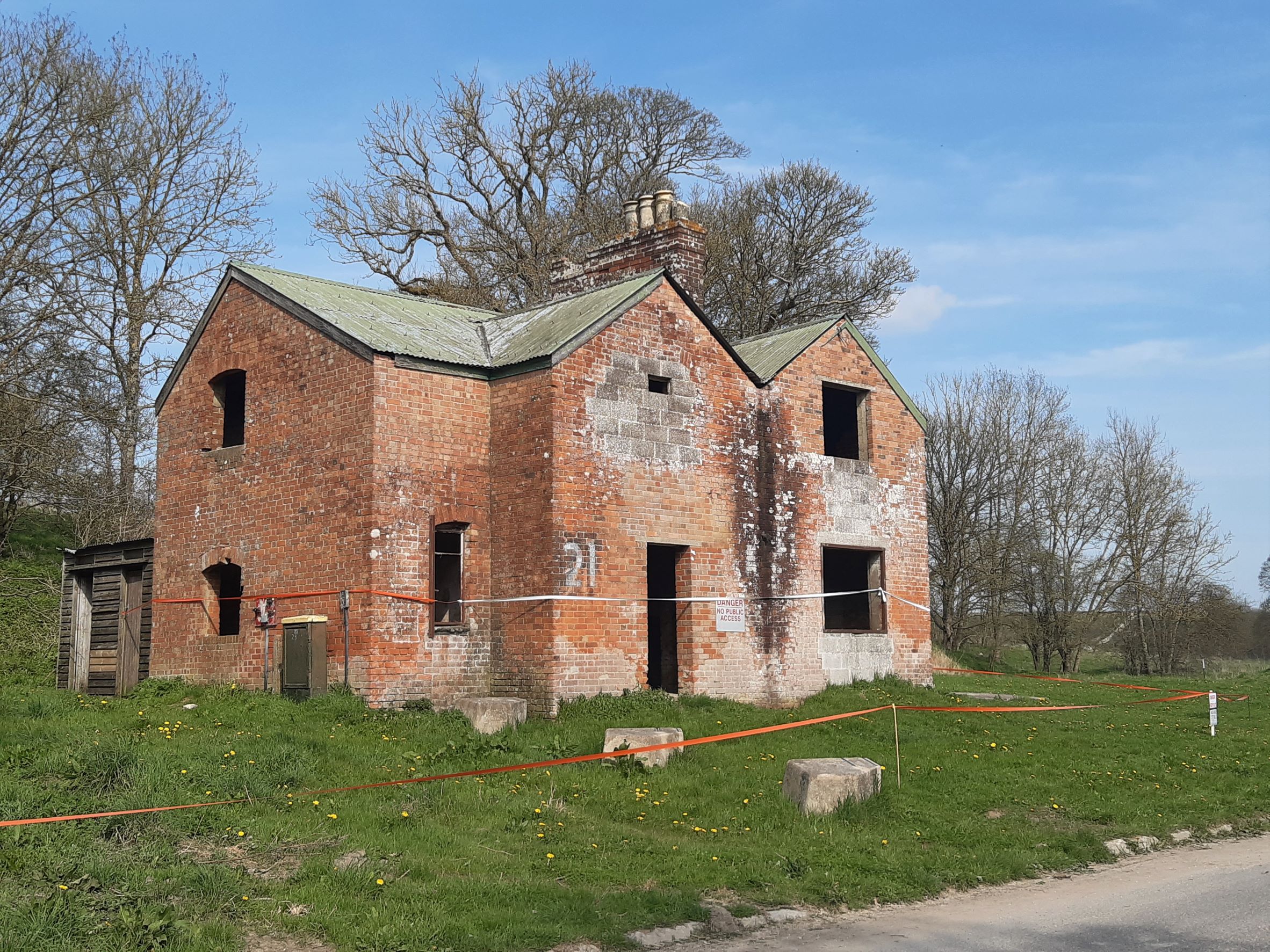

Like the cottages, most buildings here have replaced the demolished original homes, having been constructed for Urban Warfare training. 


The 13th century Church of St Giles is still standing, and is open for just a few days several times a year, as is the rest of the village. 


More solidarity with Ukraine

Its glory - at least from my point of view - is its mediaeval wall paintings.


Here's the Seven Deadly Sins - a bit difficult to make out, admittedly, though you can see the red devils quite clearly. Apparently it was a new addition in the late 15th century, courtesy of the lord of the manor, Sir Walter Hungerford, who'd been promoted on the battlefield of Bosworth Field in 1495 - ooh look, a link with my jaunt of two weeks ago. 


A set of 17th century bell-ringing changes painted on the wall of the tower

It also doesn't disappoint when it comes to graffiti with serifs.


Also in the tower there's a mason's mark in the form of a hexafoil or daisy wheel.


Outside a modern gravestone brings home the implications of the story of Imber. 


Albert Nash was the village blacksmith. It's said that the day the villagers had to leave, he was found crying over his anvil, and that he died of a broken heart. He was brought back to his beloved village to be buried.

The villagers fully expected to return after the war, as promised by the Government, but the Ministry of Defence took the land over completely. A rally was organised in 1961 to demand the villagers be allowed to move back, but a public inquiry round in favour of the military. 

Albert's wife, Martha, only returned after her death in 1967; their son, Cyril, in 1989. 

An open day organiser in the Church told me the villagers were only tenants, and that they knew the land belonged to the MoD, so would have realised they wouldn't be back. I say the land belongs to those who have worked it for generations, who have its dirt under their nails and in the creases of their palms. 


And another thing. With all those soldiers around, couldn't some of them rebuild the fine 17th and 18th century tomb chests that have been allowed to fall into ruin? 


Home, then, for birthday cake - a rather more convivial get-together than the previous two years permitted, owing to lockdown - and a sit in the field to watch the sunset and think about how everything changes, nothing can be taken for granted. 


Sunday, 10 April 2022

The IsamBards in the City

Normally, when people ask me what I did on the weekend - polite younger colleagues, mostly, who actually get up off the settee and go places - I can't think of anything much to say, or worse, can't remember. Erm, walked the dog? I suggest, hopefully. Not so this weekend. It's been busy and memorable.

Saturday was a Twelve Red Kite Day. This is number 11, which flew over my daughter Jenny's friend Jenny's wedding to Michael in Swallowfield, Berkshire. (Lots of red kites up there.) (Have I mentioned before how much I like them? I think I probably have.) Even without taking the kites into consideration, it was the loveliest day. 

Today it was back to poetting in public again - not something we've been able to do much of these last couple of years. This morning's poetry walk with the IsamBards through some of the more hidden parts of old Bristol was part of this spring's Lyra Poetry Festival. Unfortunately, Pameli Benham couldn't join us as she had to self-isolate prior to a medical procedure that had been brought forward unexpectedly, but between us, Dominic Fisher, David Johnson and I managed to read her poems as well as our own, so that she was with us in spirit.  


Our starting point for the walk (and the poems) was the Haymarket, in the sunken roundabout that has been known since the 1970s as the Bear Pit (not that there was ever one there - you need to have visited Bristol Zoo before the end of the 1960s to have seen one of those in these parts).  


Here David regaled us with what did happen here in past centuries - notably, St James's Fair, which, come to think of it, almost certainly would have involved a bear or two - while Dominic meditated on the subject of lunchtime drinking, and I observed how cities change all the time, even if it's just people taking down their bean sticks. 


We then proceeded to St James Barton, which was rather more peaceful. 


David read Pameli's poem about The Bristol Giant, who was actually Irish and called Patrick Cotter, while Dominic read his poem about Charles Wesley, whose wife, and the five of his children who predeceased him, are buried near here. 


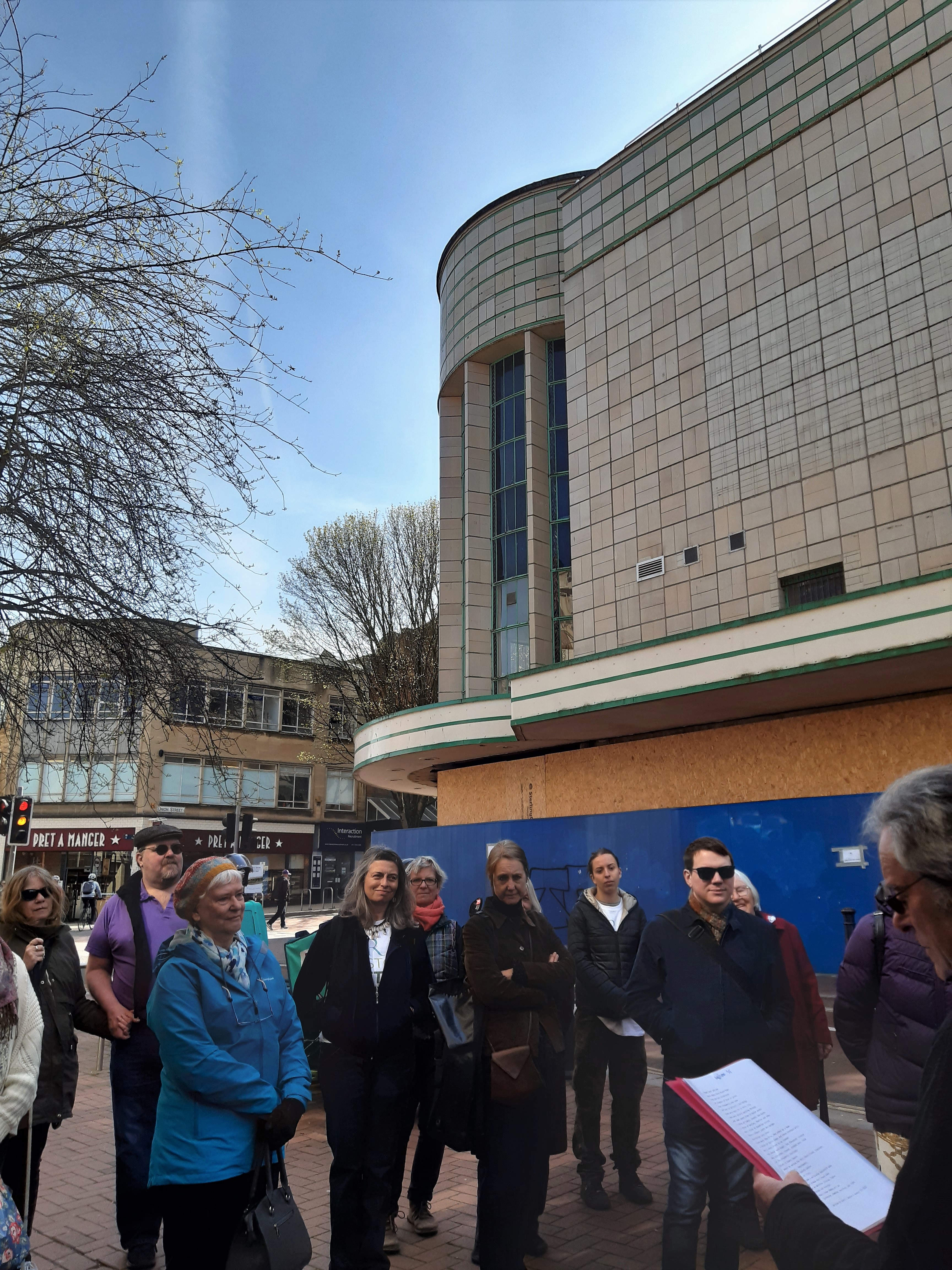
By the Art Deco Odeon, I read Pameli's poem about entrepreneur Oskar Deutsch, a Hungarian Jew who opened 258 cinemas around the UK in the space of 10 years, and David pondered/contemplated/mused/ruminated on why Peter Mark Roget's stay/sojourn/residence/stop over in Bristol from 1798 - 1799 isn't yet commemorated/memorialised/remembered/observed with a blue plaque. 

At the junction of Nelson Street and All Saints Street, we paused again in the doorway of what used to be a bank but is now something involving bowling. Being a Sunday, it wasn't too noisy, but even so there was a need to project and gesture a bit too.  

Here, we learnt about the people, and the river, buried beneath our feet, courtesy of Dominic ... 

... and I read my poem about the 15th century topographer, William Wyrcestre, and how his record of Bristol offers up occasional glimpses of a much older city.

The next section of our walk took us up St John's Steep and along John Street to Hasardysgarden, the churchyard that belonged to St John the Baptist's Church, also known as St John on the Wall. Here I read a poem about the tailors who used to play dice there before it was consecrated in 1409. We then moved on to Broad Street for poems about Edward Everard Printing Works, the steeple of St John's and the street art of two Civil War-era duellists.


My favourite bit of the walk was through the lanes that hug the ancient city wall, very little of which remains. Having traversed Bell Lane, we paused again in Small Street for poems from Dominic about Coleridge on the hunt for his publisher friend, Joseph Cottle, and St Leonard Lane, and one from me about the Flemish weaver, Edmund Blanket, who died in 1371 and is buried in St Stephen's Church. 


We were now a short step from the city centre, where David mused on the changing city and I told the story of my great-great-grandmother Mary Block and the day her ship came in. 


Our walk ended at the empty plinth where the statue of Colston once stood, and I'm pleased to say, there was absolutely no nostalgia for him or regret about his long over-due removal from anyone present. 


I read my poem about this righting of this shameful wrong, and a second about Pero Jones, the slave for whom the footbridge spanning St Augustine's Reach beyond the Centre is named. 


All that was left was for David to read the final poem, Pameli's 'In the centre of the city', and a little chit-chat and book-selling before we returned home, full of the sunlight and salt air of the city we're passing through during this lifetime.


Sunday, 3 April 2022

Fings ain't where they used to be, or A Kestrel for a King

I was chauffeuring Son the Elder to a roboteering event in Leicestershire yesterday, and as it wasn't far from Coventry where Son the Younger now works, we decided to meet up. I don't know that part of the country at all well, but as it happens my publishers, Ronnie and Dawn of Indigo Dreams, used to live in the next village, and gave me lots of suggestions for places to visit, from which we chose the Bosworth Battlefield trail. First, though, a battle with the car parking meter at Sutton Wharf, which was refusing to issue tickets.


On, then, along the Ashby canal for a short way - just far enough, in fact, to admire a very bold kestrel which passed quite close by us ... 


... and this piece of spalted wood which turned out to be not spalted at all, but faux-crackled with some sort of blackened vegetation ... 


... before turning up through Ambion wood to the Visitor Centre. Inexplicably, Son the Younger decided to rely on my largely fanciful grasp of history instead of the carefully curated exhibition, so after admiring the Earl Shilton stone coffin (Earl Shilton being a place, not a person), which was believed for many years to be that of King Richard III and which has Romano-British tool marks on its side ... 


... and the stocks ... 


... we decided to start the battlefield walk. Now, the problem with history is that it often happened a long time ago, and there's no one alive from 1485 to say with any precision just where Bosworth Field was. And so after more than 220 years of thinking you know exactly where it was, and just when you have got your marker stone set up ...
 

... some bright spark discovers the inconvenient truth that it wasn't there at all, and gets loads of plaudits, while you're left with a massive boulder marking the wrong spot altogether.

It's even worse when you've established the Heritage Centre in a 14th century tithe barn that's handily nearby, and stuck your flagpoles up with your Yorkist and Tudor flags ...


... and hell's teeth, even built your Richard III sundial with commemorative thrones. 


Now, after centuries of mistaken celebration, Ambion Hill has been returned to arable use. 


Down at Shenton Station we saw a diesel train advertising the rather optimistic destination of Scarborough. (It actually goes just a few miles up the track to Shackerstone.) 


We walked back towards Sutton Wharf along Shenton cutting, which is no longer in use.


A short detour past the turning to the canal takes you to what is currently believed to be the site of the battlefield, where, on 22nd August 1485, Henry Tudor's small rebel army defeated the much larger Royal army of King Richard III, with Richard hemmed in by marsh and cut down 'in the thickest press of his foes'. 


I think the historians might have the right location this time, as the reedmace in the far corner looks like spears coming into view.


Marsh marigold


Back at Sutton Wharf, we watched the kestrel which was still hunting and ate lunch outside in the sun. After a bit it started to snow. We vacated the seats by the cafe and watched the driver of a hire boat hurtle into view, scraping the boat along the concrete edge of the tow path. 


By now shift-working son was getting sleepy, so we headed back to robot land, and I read in the car till it was time to set off for home. Another small jaunt in this time of pandemic. I'll take what I can get.