About Me

My photo
Bristol , United Kingdom
Poet and poetry facilitator. Neurodishevelled. My sixth poetry collection, Love the Albatross, is available from Indigo Dreams or directly from me.

Saturday, 24 August 2024

... like the shoreline and the sea

Every year I aim to get down to Devon for a day with my two Bristol-based offspring. We holidayed there for decades, back when we had a caravan, and still miss how easy it was to spend time there. 

This year it was particularly hard to herd us all, even with the assistance of the family border collie, but at last we managed to find a day when we were all free and set off down the M5. 


Smugglers Lane, Holcombe


fleabane and hemp-agrimony

Having parked in Windward Lane, we negotiated the ferocious traffic on the A379 Teignmouth Road - which Cwtch the Collie, on her first visit, really didn't like - and headed down Smugglers Lane to Holcombe beach. 


I'd seen photos posted by a friend who lives locally on Facebook last autumn, after Storm Babet, noting how high the sand was at Holcombe, but it was a bit of a shock to see it for myself. 


Sprey Point


The sand was still high the Teignmouth side of Sprey Point too. I don't remember seeing it like this in all my life. 


After lunch at the Ship Inn, we caught the ferry over to Shaldon. Remembering how our old collie, Ted, loved these trips, and always affected a salty sea dog pose ... 


... I was interested to see how Cwtch, who'd only ever been on a stationary narrowboat before, would cope ...


... and whilst she lacked her predecessor's flamboyant stance, she still seemed to enjoy it. 


In Shaldon we made straight for dog-friendly Ness Beach, down through Smugglers' tunnel. 


Looking north-east towards the Ness and, in the distance, Exmouth


Looking south-west towards St Marychurch and Babbacombe


There were a lot of crystal jellyfish washed up on the beach. We found a patch that was relatively free of them and had a sit-down. 


Time to go!


From the far end of the beach, we wandered back up the tunnel and around the top of the Ness - always one of my favourite walks, though I prefer to do it back-to-front these days, so that the longer, steeper section is a descent. 


Artist's conk


I'd watched videos of the tide surging right over the Point at Teignmouth during Storm Babet last October, and from the top of the Ness, it was clear how much sand has been lost from this end of Teignmouth beach (this photo taken at low tide).  It does make you wonder how the town will fare during this year's autumn and winter storms.

Then it was back across the ferry, and ice cream with clotted cream at what used to be called Amanda's but is now something else, and back along the sea wall to Holcombe. I used the excuse that Cwtch didn't like the traffic to wait at the foot of notoriously steep Smugglers' Lane for Son the Younger to bring the car down to us. Nicely played, if I say so myself.


Not a lot of sea glass, largely because of the extra sand on the parts of the beach accessible to us with a dog, but Son the Younger did find an interestingly-shaped miniature stopper, now on the mantlepiece. 


I think she likes it ... !


Tuesday, 13 August 2024

We need to talk about estrangement

 'Love the Albatross' is in the world and I feel all kinds of emotions. 


Its subtitle is Estrangement Stories, estrangement being an increasingly common phenomenon. According to Psychology Today, one in ten people have cut off a parent or child, yet you'd never guess it from the code of silence surrounding it. And it's easy to understand why. The shame and social stigma is such that no one wants to out themselves and risk the often ill-informed judgment of those who have no experience of disowning or being disowned, yet feel qualified to offer an opinion.

I hate talking about it. And yet here I am with a whole collection of poems on the subject. And they're for anyone who's ever stood on this precipice, from whichever side of the Great Divide. Anyone who's ever felt they were the only one in this situation. Anyone who's ever looked at their child or loved family member and thought 'I'm so glad this will never happen to me'. Anyone who's ever loved someone more than they love themselves. 


'Love the Albatross’ is a meditation on inter-generational relationships, estrangement and silence, in which people communicate through messages in bottles, birds and dreams, fragmented memories assume mythological status, and the stories we tell ourselves to justify our actions escape their labyrinths and run wild.


In ‘Love the Albatross’ … estrangement, transformation and albatross are expertly woven together, with Harvey bearing witness to the nuance, complexity, and devastation inherent in this most ruinous of losses.  I found these poems authentic, liberating and transformative … Nothing is more evocative than the feeling that a writer has gone back in time with the reader, as witness and companion.

 Chaucer Cameron


Publication date is 30th August, and the collection can now be pre-ordered from the Indigo Dreams website. Signed copies are available from me - comment on this blog or contact me via social media or admin@theleapingword.com. 

Thank you. 

Saturday, 10 August 2024

To Wing and Watlington Hill

Finding myself in Oxfordshire with nine hours to fill while Son the Elder went roboteering, I headed over the border into Buckinghamshire. My destination was the village of Wing, where there's a Saxon Church, All Saints, which is believed to have been built between the 8th and 11th centuries, making it one of the oldest surviving churches in the country.


Parts of the Church which have survived from this time include this fully-preserved 9th century apse, the only one in the country; also, a Saxon window in the east wall, the 9th century triumphal arch between the apse and the nave, and the nave with its huge pillars.  


The oldest part of the church is the 8th century crypt, although I didn't get to see that.

There are also features from later centuries, forming a fascinating palimpsest. Traces of mediaeval wall paintings, for example ...


... and a beautiful 15th century roof, carved with angels and other figures, and reminiscent of others I've seen in Somerset, Dorset and Wiltshire, the fine detail of which both my eyes and my phone failed to capture.


There's a much better photo of it on Wikipedia.

There are also some impressive tombs and memorials, many of them commemorating members of the Dormer family. 


Tomb of Sir William Dormer (dd 1575)


Tomb of Robert Dormer, 1st Baron Dormer (dd 1616)

My favourite is Sir Robert Dormer's tomb, that is, the Sir Robert who died in 1552 and was buried as 'a great sheep-master in Oxfordshire'. Which must make these beautifully carved creatures sheep, I should imagine, rather than the cattle I thought they were at first. 


Memorial to Lady Anna Sophia Dormer, who died of the small pox in 1695 


Honest old Thomas COTES, that somtime was porter at Ascott Hall, hath now (alas) left his key, lodg, fyre, friends and all to have a roome in heaven. This is that good man's grave. Reader, prepare for thine, for none can tell but that you two may meete tonight, farewell. He dyed the 20th of November 1648

Having left Wing, I headed back over the border into Oxfordshire, making for Watlington Hill, where red kites are to be seen. On the way I stopped off in briefly in Bledlow and Crowell to photograph a couple of empty pub signs.


The former Corner House, Bledlow


The former Shepherd's Crook, Crowell

Every summer should include at least one walk on calcareous grasslands, and Watlington Hill is a lovely example.


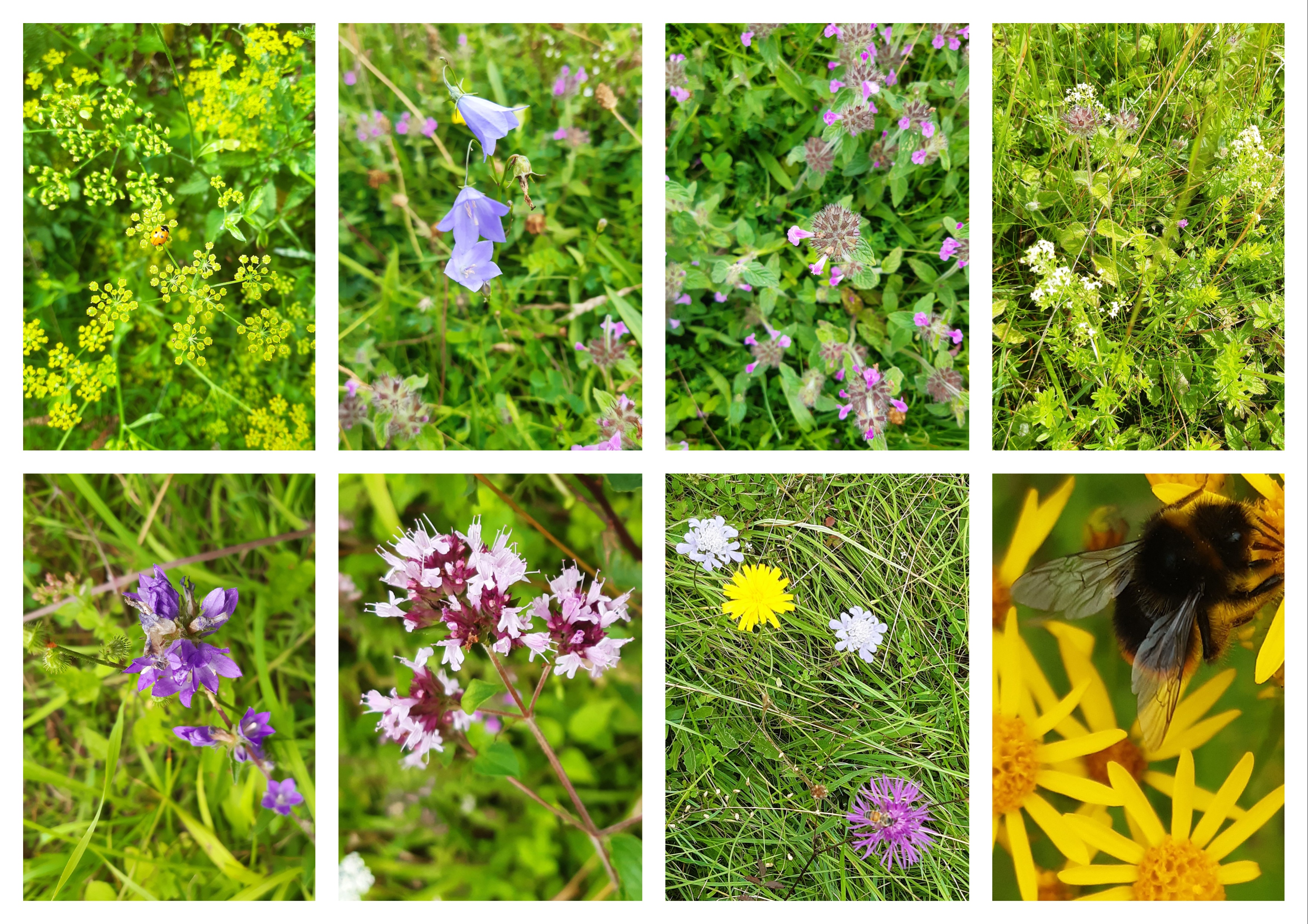
Here are just a few of the flowers I saw:


CLOCKWISE from top left: ladybird on wild parsnip; harebells; wild basil; hedge bedstraw; buff-tailed bumble bee on ragwort; scabious, hawkweed and knapweed with honey bee; oregano and clustered bellflower 


A clootie tree  in a circle of yews, which in the past were used as a natural memorial for the Esher family who once owned the land


Looking north-west to Watlington and the horizon

It was warm so I sat on a bench and watched the red kites that had been promised and duly materialised. It was so lovely to hear their strangely haunting whistling, for the first time since we went to the kite-feeding station at Bwlch Nant yr Arian last summer.


The return route around the top of the hill took me through some yew woodland ... 


... and along a pretty chalk track running parallel to a sunken and somewhat overgrown drovers' path.


Having dipped down, I laboured back up the hill, pausing and looking back every now and again, this time with views of the Vale of Oxford.


There were a couple more fairly close encounters with a red kite ...


... and two ceps which were far too elderly to be edible. 

I still had an hour and a half to spare before I picked Son the Elder up, so I drove to Iffley, which is quite near his roboteering venue, to wait it out, having realised after our visit to the church in May, that I hadn't paid enough attention to its ancient yew tree, which is believed to be at least 1600 years old and stands near its south-east corner. 


The oldest tree in Oxfordshire


Holly tree

Back in Botley, I picked up a deeply satisfied Son the Elder, whose robots had won a side competition and come second in the main event. An all-round good day.